Shopping cart
Your cart empty!

Your cart empty!

Join 10k+ people to get notified about new posts, news and tips.
Do not worry we don't spam!
Terms of use dolor sit amet consectetur, adipisicing elit. Recusandae provident ullam aperiam quo ad non corrupti sit vel quam repellat ipsa quod sed, repellendus adipisci, ducimus ea modi odio assumenda.
Lorem ipsum dolor sit amet consectetur adipisicing elit. Sequi, cum esse possimus officiis amet ea voluptatibus libero! Dolorum assumenda esse, deserunt ipsum ad iusto! Praesentium error nobis tenetur at, quis nostrum facere excepturi architecto totam.
Lorem ipsum dolor sit amet consectetur adipisicing elit. Inventore, soluta alias eaque modi ipsum sint iusto fugiat vero velit rerum.
Sequi, cum esse possimus officiis amet ea voluptatibus libero! Dolorum assumenda esse, deserunt ipsum ad iusto! Praesentium error nobis tenetur at, quis nostrum facere excepturi architecto totam.
Lorem ipsum dolor sit amet consectetur adipisicing elit. Inventore, soluta alias eaque modi ipsum sint iusto fugiat vero velit rerum.
Dolor sit amet consectetur adipisicing elit. Sequi, cum esse possimus officiis amet ea voluptatibus libero! Dolorum assumenda esse, deserunt ipsum ad iusto! Praesentium error nobis tenetur at, quis nostrum facere excepturi architecto totam.
Lorem ipsum dolor sit amet consectetur adipisicing elit. Inventore, soluta alias eaque modi ipsum sint iusto fugiat vero velit rerum.
Sit amet consectetur adipisicing elit. Sequi, cum esse possimus officiis amet ea voluptatibus libero! Dolorum assumenda esse, deserunt ipsum ad iusto! Praesentium error nobis tenetur at, quis nostrum facere excepturi architecto totam.
Lorem ipsum dolor sit amet consectetur adipisicing elit. Inventore, soluta alias eaque modi ipsum sint iusto fugiat vero velit rerum.
Do you agree to our terms? Sign up
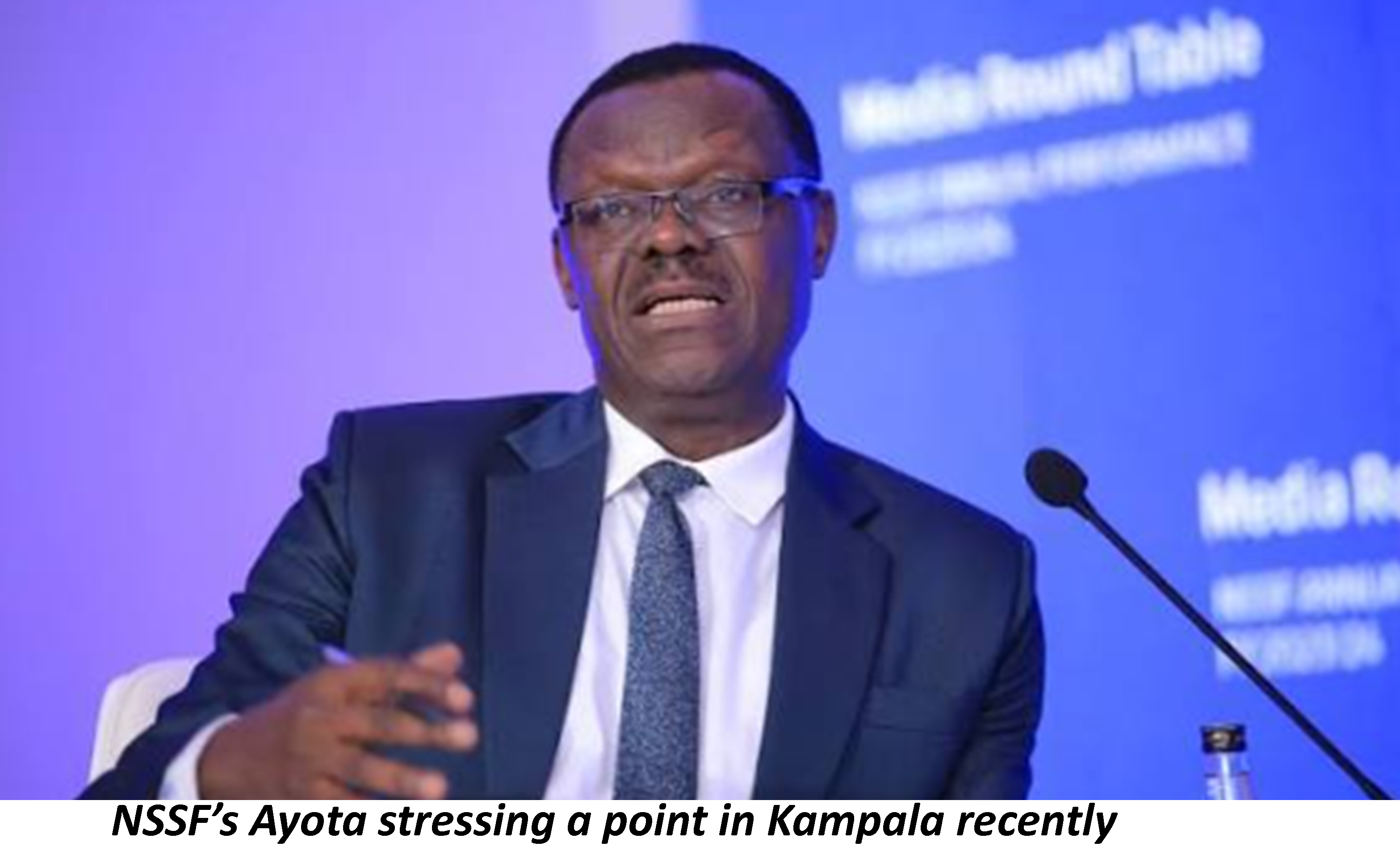
Uganda’s housing market is entering a new phase as the National Social Security Fund (NSSF), under Managing Director Patrick Ayota, expands its investment in residential development while searching for new ways to make homeownership more accessible.
NSSF now allocates about 7.6% of its UGX25 trillion portfolio—roughly UGX1.9 trillion—to real estate, while its housing pipeline includes the 3,500-unit Temangalo project, the Kyanja Off-Taker development and new projects being assessed at Nsimbe and Bukerere.
The shift is significant because Uganda's housing challenge is no longer simply about constructing more homes. It is about producing housing that households can afford, financing it sustainably and developing communities with the infrastructure needed to support them.
Ayota, who became NSSF's substantive Managing Director in August 2023 after serving as Acting Managing Director, brings more than a decade of experience within the Fund, including six years as Chief Finance Officer and later service as Deputy Managing Director. His financial background has shaped an investment approach that combines portfolio diversification with long-term asset development.
The scale of the challenge provides the backdrop to NSSF's strategy.
The Fund said in a 2025 affordable-housing procurement document that Uganda had a housing deficit of 2.4 million units. Its real-estate portfolio had already delivered more than 300 housing units, but NSSF acknowledged that the national requirement remains far beyond the output of individual developers.
The Ministry of Finance previously estimated the deficit at 2.4 million homes, including significant shortages in both urban and rural areas. The ministry also noted that only about 60,000 housing units were constructed in 2021, illustrating the gap between annual supply and underlying demand.
The challenge is compounded by the cost of land, construction materials, infrastructure and housing finance.
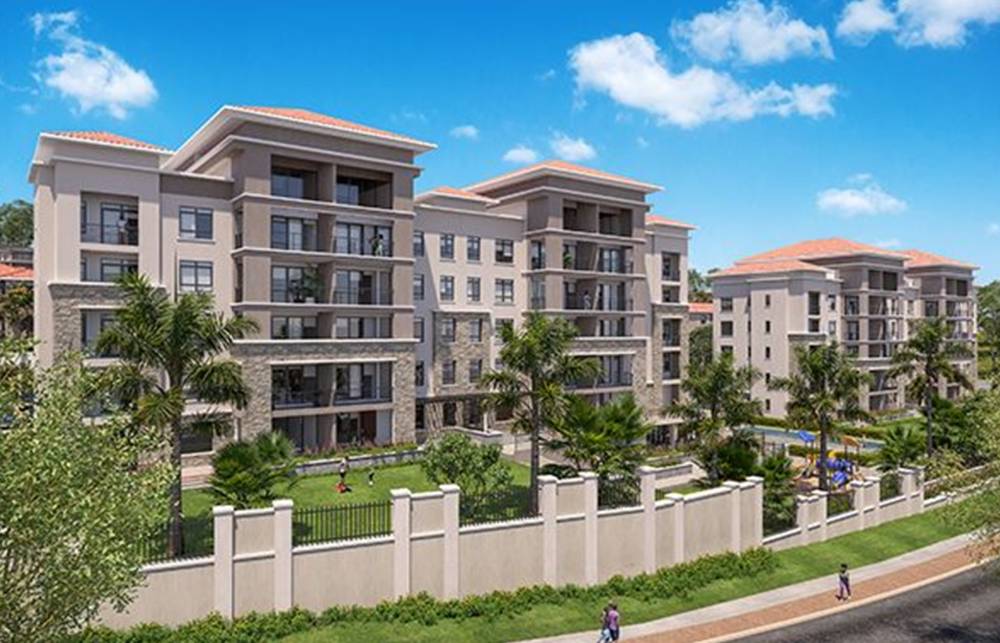
NSSF's earlier residential developments established its presence across different segments of the market.
The Fund's portfolio includes high-end developments such as Citadel Place in Mbuya, which has been completed and sold out, and Solana Lifestyle and Residences in Lubowa, a large mixed-use community planned for about 3,000 homes.
The strategy is now placing greater emphasis on scale and affordability.
The clearest example is Temangalo, a 463.87-acre development in Wakiso District, about 17 kilometres from Kampala's city centre.
The project is planned to deliver approximately 3,500 homes, alongside commercial areas, schools, healthcare facilities, social amenities, roads, water, electricity and sewerage infrastructure.
NSSF describes Temangalo as a mixed-use affordable housing development, with the project designed to combine residential units with community amenities and supporting infrastructure.
Temangalo represents a substantial departure from smaller residential developments.
Its first phase consists of 550 units:
NSSF currently lists prices for Temangalo starting at UGX90 million. :contentReference[oaicite:2]{index=2}
That price point is important, but it also illustrates why the term affordable housing requires careful qualification.
A UGX90 million house may be substantially cheaper than premium Kampala property, yet it remains beyond the reach of many households without access to long-term mortgage or alternative financing.
That is why housing finance is becoming as important as construction.
NSSF has recognised this challenge by seeking innovative homeownership savings and financial solutions linked to its Smartlife Flexi voluntary savings product.
In 2025, the Fund invited proposals for models that could ultimately ease access to affordable housing, indicating that its strategy is moving beyond simply building houses toward addressing how households finance ownership.
This could become one of the most important aspects of Ayota's housing strategy.
A house priced within reach on paper is not necessarily affordable if the buyer cannot access appropriate financing.
The broader objective is therefore to connect saving, investment, housing development and ownership.
Temangalo is not operating in isolation.
NSSF's current residential portfolio includes Solana Lifestyle and Residences, the Kyanja Off-Taker Project and other developments.
Its 2025 integrated report records Solana's first phase of 306 units as complete and on sale, while Kyanja's 160 housing units are under construction with completion projected for the end of 2027.
Solana represents the premium end of the market.
The 600-acre development is planned as a community of about 3,000 units, combining apartments, townhouses, bungalows, villas and penthouses with commercial, leisure and public spaces.
The contrast with Temangalo demonstrates the breadth of NSSF's real-estate strategy: from premium developments and commercial assets to large-scale affordable housing.

NSSF is also preparing for the next stage.
In March 2026, the Fund sought consultants to develop a comprehensive delivery strategy for its real-estate portfolio and conduct feasibility studies and master plans for Nsimbe and Bukerere.
Nsimbe, in Mpigi District, is identified in NSSF's 2025 report as a potential 1,000-unit residential development, including apartments and villas, with leisure facilities.
Development remains on hold pending partnerships.
These projects suggest that NSSF is thinking beyond individual housing estates toward a longer-term real-estate pipeline.
For NSSF, housing is also an investment decision.
The Fund says its real-estate strategy is designed to generate capital gains and income while contributing to national development and addressing the housing deficit.
Ayota's professional background is particularly relevant here.
His career at NSSF has included portfolio diversification, yield optimisation and balancing fixed-income investments with real estate, equities and regional investments.
That means the housing strategy must ultimately serve two objectives:
The challenge is therefore not simply how many houses NSSF can build.
It is whether those developments can produce long-term value while also addressing Uganda's housing needs.
NSSF's growing housing footprint could have wider implications for Uganda's property market.
Large institutional developments can influence land values, construction activity, infrastructure provision and the standards expected by homebuyers.
They can also demonstrate whether large-scale housing can be delivered at prices below the premium segment while maintaining investment discipline.
The immediate measure of success will be Temangalo's delivery and the ability of prospective homeowners to finance purchases.
The longer-term test will be whether NSSF can turn its expanding land and capital base into a sustained pipeline of homes rather than isolated projects.
For Uganda, the stakes are considerable.
With a housing deficit measured in millions of units, no single institution can solve the problem.
But under Ayota, NSSF is increasingly positioning itself as one of the market's most significant institutional developers—using pension capital not only to build assets for retirement returns, but also to participate in shaping the places where Ugandans will live.
If the next generation of projects can combine scale, affordability, financing and sound investment returns, NSSF's housing strategy could become one of the more consequential forces in Uganda's evolving property market.
The story is therefore bigger than Temangalo.
It is about whether Uganda can develop a housing model where institutional capital, long-term savings and large-scale development work together to close a housing gap that has persisted for years.
For Ayota and NSSF, the challenge is to prove that pension capital can simultaneously generate sustainable returns and help build homes that ordinary Ugandans can realistically aspire to own.