Shopping cart
Your cart empty!

Your cart empty!

Join 10k+ people to get notified about new posts, news and tips.
Do not worry we don't spam!
Terms of use dolor sit amet consectetur, adipisicing elit. Recusandae provident ullam aperiam quo ad non corrupti sit vel quam repellat ipsa quod sed, repellendus adipisci, ducimus ea modi odio assumenda.
Lorem ipsum dolor sit amet consectetur adipisicing elit. Sequi, cum esse possimus officiis amet ea voluptatibus libero! Dolorum assumenda esse, deserunt ipsum ad iusto! Praesentium error nobis tenetur at, quis nostrum facere excepturi architecto totam.
Lorem ipsum dolor sit amet consectetur adipisicing elit. Inventore, soluta alias eaque modi ipsum sint iusto fugiat vero velit rerum.
Sequi, cum esse possimus officiis amet ea voluptatibus libero! Dolorum assumenda esse, deserunt ipsum ad iusto! Praesentium error nobis tenetur at, quis nostrum facere excepturi architecto totam.
Lorem ipsum dolor sit amet consectetur adipisicing elit. Inventore, soluta alias eaque modi ipsum sint iusto fugiat vero velit rerum.
Dolor sit amet consectetur adipisicing elit. Sequi, cum esse possimus officiis amet ea voluptatibus libero! Dolorum assumenda esse, deserunt ipsum ad iusto! Praesentium error nobis tenetur at, quis nostrum facere excepturi architecto totam.
Lorem ipsum dolor sit amet consectetur adipisicing elit. Inventore, soluta alias eaque modi ipsum sint iusto fugiat vero velit rerum.
Sit amet consectetur adipisicing elit. Sequi, cum esse possimus officiis amet ea voluptatibus libero! Dolorum assumenda esse, deserunt ipsum ad iusto! Praesentium error nobis tenetur at, quis nostrum facere excepturi architecto totam.
Lorem ipsum dolor sit amet consectetur adipisicing elit. Inventore, soluta alias eaque modi ipsum sint iusto fugiat vero velit rerum.
Do you agree to our terms? Sign up

Uganda Airlines is planning major fleet, route and infrastructure expansion. But can Entebbe compete with Nairobi and Addis Ababa as a leading African aviation hub?
Uganda Airlines is entering one of the most important periods in its young history.
The national carrier wants to expand its network, improve aircraft utilisation, develop domestic services, strengthen technical capabilities and eventually become a more commercially sustainable airline. At the same time, Uganda has committed to a major fleet expansion that includes four Boeing 737-8s and four Boeing 787-9 Dreamliners, with deliveries expected in 2032 and 2033.
On paper, it sounds ambitious.
But here's the question worth asking:
Can Uganda Airlines actually turn Entebbe into a major African aviation hub—or is Uganda getting ahead of the demand?
That's where the debate begins.
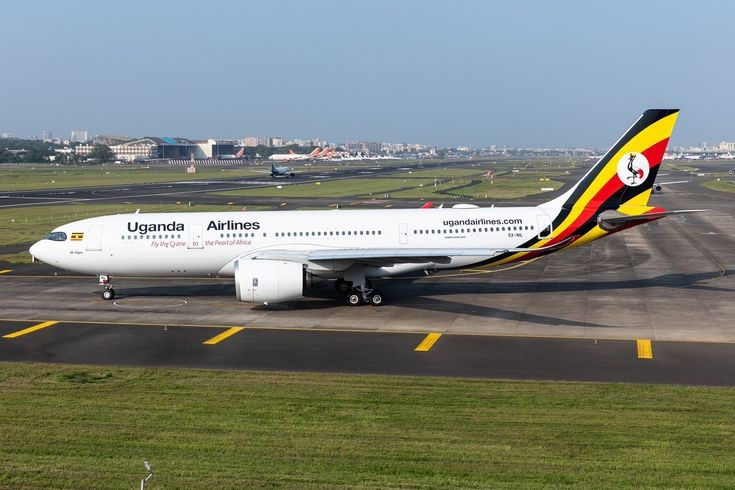
Uganda Airlines isn't simply talking about adding aircrafts.
Its current strategy includes expanding routes from Entebbe, exploring domestic services, improving aircraft utilization and bringing more technical and operational services in-house. The airline also wants to invest in Ugandan aviation talent and build stronger supporting infrastructure.
The broader 10-year plan has reportedly targeted up to 32 regional and international destinations, alongside infrastructure such as maintenance facilities, a cargo warehouse, a business-class lounge and other developments.
That raises an interesting possibility:
What if Entebbe could become the gateway through which more passengers connect across East and Central Africa?
But ambition alone doesn't create a hub.
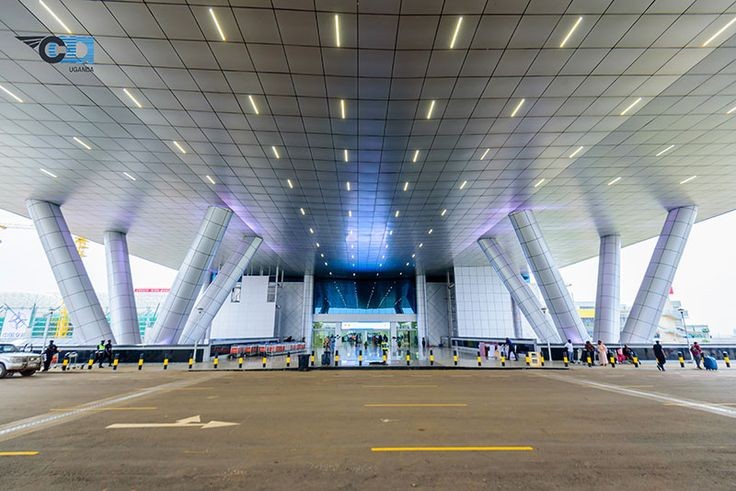
Uganda Airlines' first-ever direct Boeing order is perhaps the clearest signal of where the airline wants to go.
The order consists of:
The 737-8s are intended to support regional and medium-haul growth, while the 787-9s are designed for longer international routes.
But here's the unusual part:
The aircraft aren't arriving tomorrow.
Deliveries are expected in 2032 and 2033. That gives Uganda Airlines several years to build its network, workforce, infrastructure and passenger demand before the new aircraft arrive.
This is where the conversation becomes more complicated.
An aircraft sitting on the ground doesn't generate revenue.
A large aircraft flying with empty seats can become a financial burden.
And a new route can look impressive on a map while still losing money.
Uganda Airlines' leadership has therefore been discussing a turnaround strategy focused on becoming commercially sustainable before the new Boeing aircraft arrive. The airline has stated an ambition to reach break-even around 2030–2031, depending on the source and assumptions surrounding government support.
That creates a fascinating race against time:
2026 → rebuild the business
2030/31 → target break-even
2032/33 → begin receiving new Boeing aircraft
If Uganda gets the sequence right, the Boeing order could arrive at exactly the right moment.
If it doesn't, the new aircraft could create additional financial pressure.
This may be the biggest challenge.
Uganda Airlines isn't trying to build an African hub from scratch without competition.
Look around East Africa.
Kenya Airways has already established Nairobi as one of the continent's important international gateways.
Ethiopian Airlines has built an enormous connecting network around Addis Ababa and continues to expand its African connectivity.
RwandAir has positioned Kigali as another important regional connection point.

So ask yourself:
Why would an international passenger choose to connect through Entebbe instead of Nairobi or Addis Ababa?
That's the question Uganda Airlines ultimately has to answer.
The answer probably isn't simply more destinations.
A successful hub needs an ecosystem.
That means:
Passengers don't want six-hour connection windows or unpredictable schedules.
They want to land in Entebbe and know their next flight will be ready.
A passenger flying from London to Nairobi and onward to another African destination may compare several options.
Uganda Airlines has to make Entebbe commercially attractive.
One flight a week isn't enough to create a powerful connecting hub.
Passengers value choice.
This is often overlooked.
Uganda's location and agricultural economy could make air cargo an important part of the hub strategy. Uganda Airlines' expansion plans include cargo capacity, which could diversify revenue beyond passengers.
Bringing more maintenance and ground-handling activities in-house could potentially improve operational control while developing Uganda's aviation workforce.
Here's where I think the most interesting debate lies.
Uganda doesn't necessarily have to wait until 2032 to prove that Entebbe can become a hub.
The existing fleet is the test.
Can Uganda Airlines increase aircraft utilisation?
Can it identify profitable routes?
Can it build connecting traffic?
Can it improve reliability?
Can it attract passengers who currently connect through Nairobi, Addis Ababa or Doha?
Can it make Entebbe a destination people intentionally choose for connections?
If the answer to these questions is yes, then the Boeing aircraft could arrive into an already-developed network.
If the answer is no, more aircraft won't automatically solve the underlying problem.
There is a genuine opportunity.
Uganda sits in an interesting geographic position, with access to markets in East Africa, Central Africa and beyond.
Its tourism industry also provides another potential advantage.
Imagine an international traveller flying:
London → Entebbe → Uganda safari → Kigali → Nairobi → home
Or:
Dubai → Entebbe → Central Africa
Or:
Mumbai → Entebbe → West/Central Africa
The opportunity is not necessarily to compete with every major African hub.
It could be about finding the routes and markets where Entebbe has a natural advantage.
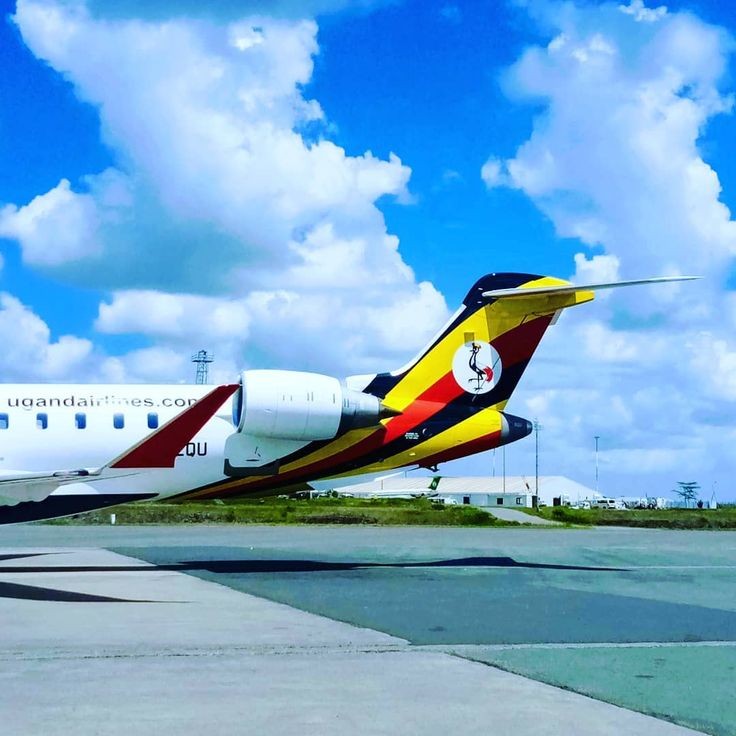
Uganda Airlines' supporters could argue:
“You can't build a major airline without investing ahead of demand.”
And there is some logic to that.
Airlines need aircraft to open routes. Routes create connectivity. Connectivity can stimulate tourism, trade and investment.
But critics could ask:
“Why commit billions to aircraft before proving that the market can consistently fill them?”
Both arguments have merit.
And perhaps the answer lies somewhere in the middle.
Uganda may need to invest ahead of demand—but strategically, not blindly.
The most exciting part of Uganda Airlines' strategy may actually be bigger than the airline itself.
A stronger national carrier could create opportunities for:
The airline's plan to increase training and develop more technical capabilities could therefore have effects beyond the aircraft themselves.
It's easy to look at the Boeing order and think:
“Uganda Airlines is getting bigger.”
But I think the more important story is:
The Boeing 737-8 and 787-9 are tools.
They aren't the strategy.
The strategy is routes, passengers, cargo, reliability, partnerships, infrastructure, talent and profitability.
If Uganda gets those pieces right, Entebbe could become much more than Uganda's international airport.
It could become a genuine regional gateway.
If it doesn't, the country could simply end up with more aircraft without enough profitable demand to support them.
Uganda Airlines has already made its bet.
Now the question isn't:
“Will Uganda get more aircraft?”
We know it will—assuming the announced plans proceed.
The more important question is:
“By the time those Boeing aircraft arrive, will Entebbe have enough passengers, cargo, routes and connections to make Uganda Airlines a true African hub carrier?”
What do you think?
Could Entebbe realistically challenge Nairobi and Addis Ababa, or should Uganda Airlines focus on becoming a strong regional carrier before attempting to build a major international hub?