Shopping cart
Your cart empty!

Your cart empty!

Join 10k+ people to get notified about new posts, news and tips.
Do not worry we don't spam!
Terms of use dolor sit amet consectetur, adipisicing elit. Recusandae provident ullam aperiam quo ad non corrupti sit vel quam repellat ipsa quod sed, repellendus adipisci, ducimus ea modi odio assumenda.
Lorem ipsum dolor sit amet consectetur adipisicing elit. Sequi, cum esse possimus officiis amet ea voluptatibus libero! Dolorum assumenda esse, deserunt ipsum ad iusto! Praesentium error nobis tenetur at, quis nostrum facere excepturi architecto totam.
Lorem ipsum dolor sit amet consectetur adipisicing elit. Inventore, soluta alias eaque modi ipsum sint iusto fugiat vero velit rerum.
Sequi, cum esse possimus officiis amet ea voluptatibus libero! Dolorum assumenda esse, deserunt ipsum ad iusto! Praesentium error nobis tenetur at, quis nostrum facere excepturi architecto totam.
Lorem ipsum dolor sit amet consectetur adipisicing elit. Inventore, soluta alias eaque modi ipsum sint iusto fugiat vero velit rerum.
Dolor sit amet consectetur adipisicing elit. Sequi, cum esse possimus officiis amet ea voluptatibus libero! Dolorum assumenda esse, deserunt ipsum ad iusto! Praesentium error nobis tenetur at, quis nostrum facere excepturi architecto totam.
Lorem ipsum dolor sit amet consectetur adipisicing elit. Inventore, soluta alias eaque modi ipsum sint iusto fugiat vero velit rerum.
Sit amet consectetur adipisicing elit. Sequi, cum esse possimus officiis amet ea voluptatibus libero! Dolorum assumenda esse, deserunt ipsum ad iusto! Praesentium error nobis tenetur at, quis nostrum facere excepturi architecto totam.
Lorem ipsum dolor sit amet consectetur adipisicing elit. Inventore, soluta alias eaque modi ipsum sint iusto fugiat vero velit rerum.
Do you agree to our terms? Sign up
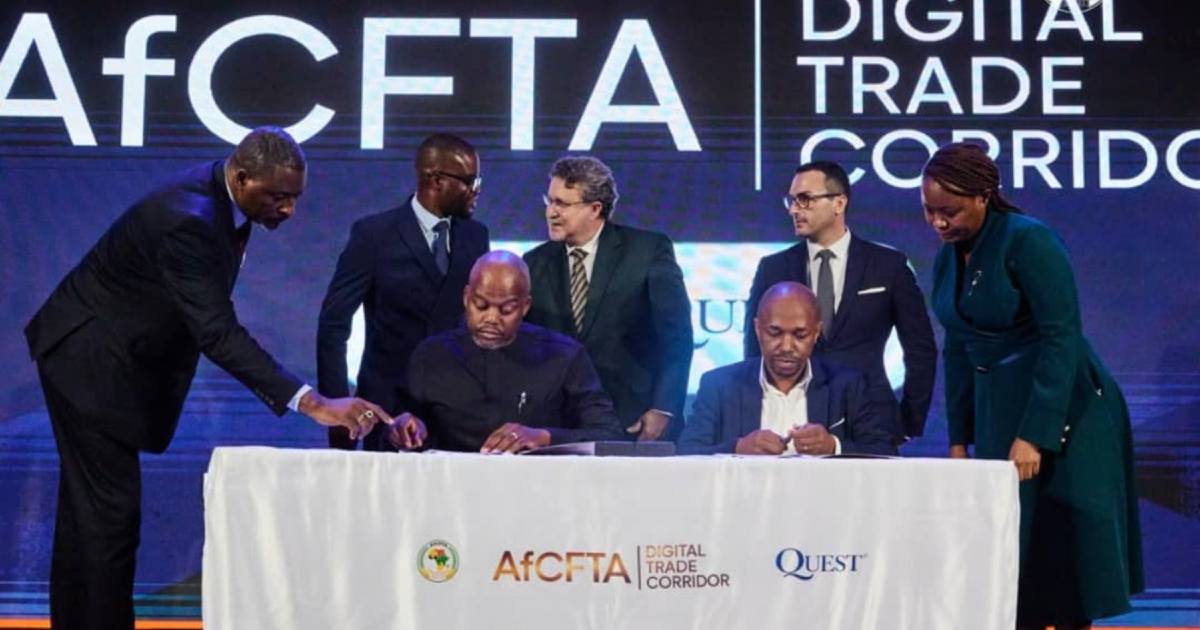
East Africa — Africa has taken another significant step towards converting continental integration from political ambition into commercial infrastructure. On August 31, 2026, the AfCFTA Secretariat and Quest Ghana Limited signed an agreement establishing the AfCFTA Digital Trade Corridor, backed by sovereign support from Seychelles.
The project is valued by Quest Ghana at $5.17 billion, but its economic ambition is considerably larger: helping increase intra-African commerce from roughly $200 billion to $500 billion and beyond through digital marketplaces, payments, logistics and commodity-trading infrastructure.
The distinction matters. Africa has not signed a $500 billion financing deal. It has established infrastructure intended to help create a continental trading environment capable of supporting that scale of commerce. That shifts the conversation from another African declaration towards the machinery required for integration.
The proposed corridor combines a digital marketplace, interoperable cross-border payments, logistics systems and trading, tracking and settlement infrastructure. It also envisages an African Minerals and Commodities Exchange capable of connecting African resources more directly with continental and eventually international capital and markets.
That infrastructure addresses an expensive weakness. The AfCFTA Secretariat estimates that payments associated with intra-African trade currently cost more than $5 billion annually, illustrating how fragmented financial systems can impose significant costs even before goods move through ports, highways, railways and borders.
AfCFTA potentially reorganises the economic geography of Africa. Its long-term significance is not simply removing tariffs. It is creating conditions in which entrepreneurs in Kampala, engineers in Nairobi, manufacturers in Lagos and financiers in Johannesburg can increasingly regard Africa as one interconnected commercial space.
The agreement covers a continental market of about 1.4 billion people and approximately $3.4 trillion in combined GDP. But population and GDP alone do not create integration. Markets become functional when institutions, infrastructure, knowledge, standards and human relationships make transactions predictable.
This is where social capital becomes economic infrastructure. Africa requires accountants who understand cross-border transactions, lawyers familiar with continental commercial rules, programmers building interoperable systems, logistics professionals coordinating regional supply chains and entrepreneurs capable of creating companies whose natural marketplace is continental rather than national.
The World Bank argues that Africa's next integration gains will depend on connecting production across borders and making customs, payments, standards, transport, energy and digital systems interoperable. It estimates that roughly 60% of trade costs arise from unilateral or behind-the-border constraints.
Therefore, Africa cannot build AfCFTA exclusively from Addis Ababa, Accra or national ministries. Integration must eventually reach universities, technical colleges, professional associations, financial institutions, technology companies, manufacturers and ordinary businesses. The continental market needs a continental economic culture beneath its legal architecture.
Africa’s youth should consequently be understood not principally as a demographic challenge, but as the human infrastructure of continental integration. A larger market creates limited transformation if young Africans remain educated primarily for national employment systems rather than continental production, entrepreneurship and technological networks.
Universities and vocational institutions should begin producing an AfCFTA generation: young Africans trained in digital commerce, international business, artificial intelligence, coding, logistics, fintech, industrial production, languages, trade law, financial engineering and entrepreneurship, alongside the technical occupations required by expanding African value chains.
This requires portability of skills. A software developer trained in Uganda should participate easily in a Nigerian project. A Kenyan engineer should enter infrastructure projects elsewhere in Africa. A Ghanaian financial analyst should understand investment opportunities across Francophone, Anglophone and Lusophone markets.
Such mobility creates something tariffs cannot manufacture: continental relationships. Networks developed among African students, professionals, founders, investors and institutions can become the trust architecture supporting commerce. Social capital therefore becomes an invisible trade corridor operating alongside roads, aviation networks, ports and digital payment systems.
Information technology could become AfCFTA's most powerful equaliser because digital infrastructure can compress geographic distance. The Digital Trade Protocol specifically promotes interoperability, digital skills, innovation, entrepreneurship, digital industrialisation and common frameworks for secure cross-border digital commerce.
The opportunity extends far beyond e-commerce websites. Africa needs digital identities, cybersecurity systems, interoperable payment rails, electronic customs documentation, cloud infrastructure, logistics platforms, artificial-intelligence services, trade databases and verification systems capable of allowing companies in different jurisdictions to transact with greater confidence.
That architecture could particularly benefit smaller businesses. African SMEs account for more than 90% of enterprises, yet many remain constrained by limited financing, technology, productivity and fragmented market access. Digital infrastructure can lower some of those barriers and connect smaller producers to regional value chains.
The AfCFTA corridor therefore should not become merely infrastructure for governments and large corporations. Its transformative test will be whether a young entrepreneur can discover customers elsewhere in Africa, establish commercial credibility, receive payment affordably, arrange logistics and expand without constructing separate systems for every country.
Continental integration should also not be confused with economic isolation. AfCFTA can make Africa more effective within globalization precisely by strengthening the internal market from which African businesses negotiate externally. Integration can provide scale while global markets provide capital, technology, knowledge, investment and customers.
The strategic objective should therefore be integration before stronger globalization, not integration instead of globalization. Africa needs sufficient internal economic density to negotiate internationally as an interconnected production and consumer system rather than predominantly as dozens of fragmented commodity-exporting markets.
This requires regional value chains capable of converting African resources into increasingly sophisticated African products. Minerals, agriculture and energy should connect with processing, manufacturing, finance, logistics, technology and professional services before products enter global markets whenever commercial conditions make such value addition competitive.
The World Bank similarly argues that regional value chains tend to be more diversified and manufacturing-intensive than Africa's exports to external markets, which remain comparatively concentrated in commodities. Deeper services liberalisation could increase services trade within the AfCFTA area substantially by 2035.
Ultimately, AfCFTA must create more than a continental marketplace. Africa requires a continental citizen economically: a generation able to work across borders, build multinational African companies, mobilise investment, understand different African societies and simultaneously compete within global professional and technological systems.
Governments can negotiate protocols. Central banks can connect payment systems. Investors can finance infrastructure. Technology companies can build platforms. But Africa's $500 billion ambition will ultimately depend upon millions of people developing the competence, trust and networks necessary to use those institutions productively.
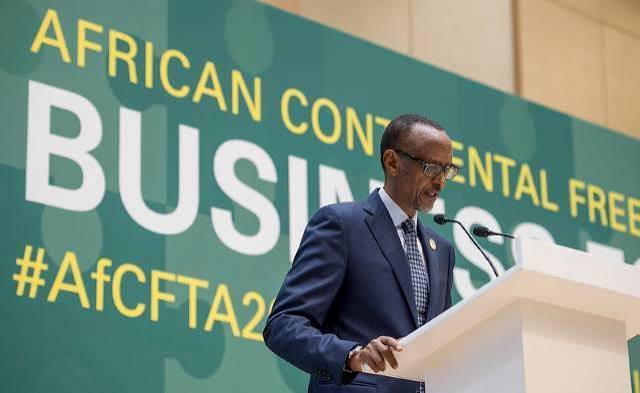
That is the deeper significance of the Digital Trade Corridor. Physical and digital infrastructure may connect markets, but social capital connects people. When the two mature together, AfCFTA can evolve from a free-trade agreement into an operating continental economic system.
Africa's decisive asset may therefore not be the $500 billion trade target itself. It may be the generation created while pursuing it: digitally capable, commercially interconnected and globally competitive Africans who increasingly understand that their national economies are foundations, while the continent represents their expanded marketplace.
If AfCFTA succeeds at that level, Africa will not merely participate more effectively in globalization. It will possess stronger internal institutions, networks and productive capacity with which to manage its relationship with globalization — connecting African markets to the world from a position of greater continental scale.