Shopping cart
Your cart empty!

Your cart empty!

Join 10k+ people to get notified about new posts, news and tips.
Do not worry we don't spam!
Terms of use dolor sit amet consectetur, adipisicing elit. Recusandae provident ullam aperiam quo ad non corrupti sit vel quam repellat ipsa quod sed, repellendus adipisci, ducimus ea modi odio assumenda.
Lorem ipsum dolor sit amet consectetur adipisicing elit. Sequi, cum esse possimus officiis amet ea voluptatibus libero! Dolorum assumenda esse, deserunt ipsum ad iusto! Praesentium error nobis tenetur at, quis nostrum facere excepturi architecto totam.
Lorem ipsum dolor sit amet consectetur adipisicing elit. Inventore, soluta alias eaque modi ipsum sint iusto fugiat vero velit rerum.
Sequi, cum esse possimus officiis amet ea voluptatibus libero! Dolorum assumenda esse, deserunt ipsum ad iusto! Praesentium error nobis tenetur at, quis nostrum facere excepturi architecto totam.
Lorem ipsum dolor sit amet consectetur adipisicing elit. Inventore, soluta alias eaque modi ipsum sint iusto fugiat vero velit rerum.
Dolor sit amet consectetur adipisicing elit. Sequi, cum esse possimus officiis amet ea voluptatibus libero! Dolorum assumenda esse, deserunt ipsum ad iusto! Praesentium error nobis tenetur at, quis nostrum facere excepturi architecto totam.
Lorem ipsum dolor sit amet consectetur adipisicing elit. Inventore, soluta alias eaque modi ipsum sint iusto fugiat vero velit rerum.
Sit amet consectetur adipisicing elit. Sequi, cum esse possimus officiis amet ea voluptatibus libero! Dolorum assumenda esse, deserunt ipsum ad iusto! Praesentium error nobis tenetur at, quis nostrum facere excepturi architecto totam.
Lorem ipsum dolor sit amet consectetur adipisicing elit. Inventore, soluta alias eaque modi ipsum sint iusto fugiat vero velit rerum.
Do you agree to our terms? Sign up
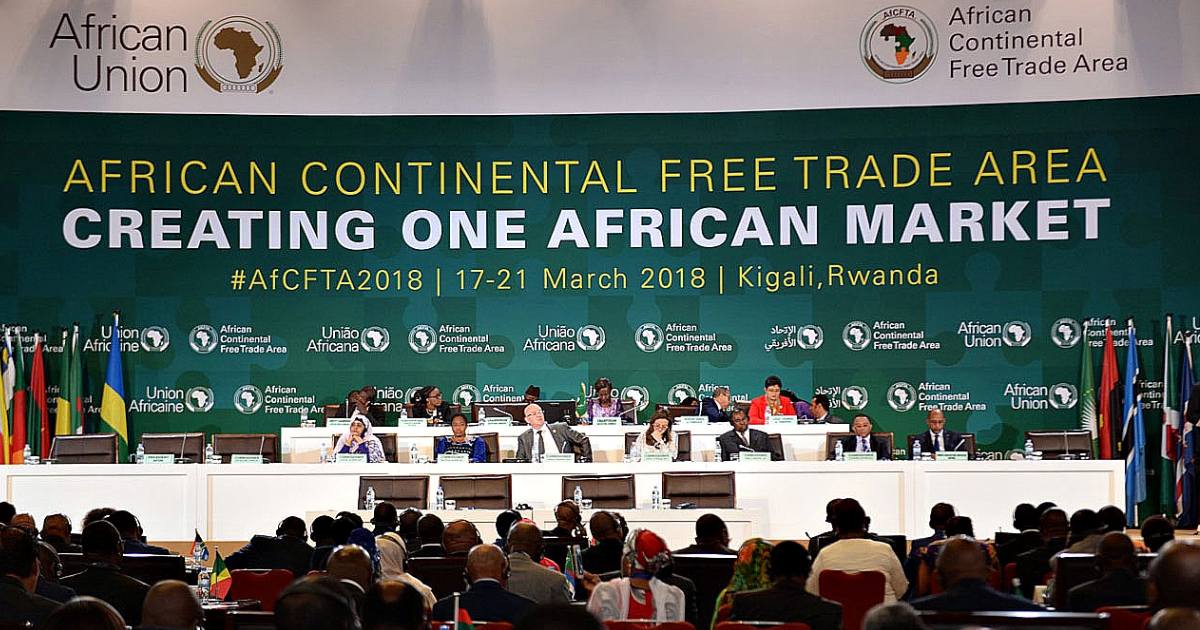
Africa’s long ambition to trade more with itself is beginning to acquire industrial muscle, as the African Continental Free Trade Area expands preferential commerce while companies such as Dangote Group build production systems designed to serve markets beyond their national borders.
Intra-African trade reached a record $220 billion in 2024, rising 12.5 percent in one year, according to figures cited by the AfCFTA Secretariat. The Secretariat projects the figure could reach $230 billion by 2027, although intra-African commerce remains below 20 percent of Africa’s total trade.
The changing numbers coincide with a potentially bigger structural shift. Africa is attempting to transform 55 national economies and eight Regional Economic Communities into a progressively integrated commercial space where businesses can manufacture in one country and increasingly sell across the continent.
The African Continental Free Trade Area, or AfCFTA, is an African Union flagship programme under Agenda 2063. Trading began in January 2021, with the agreement seeking a single continental market for goods and services while progressively reducing barriers that have historically fragmented African commerce.
Its scale is unprecedented in Africa. The framework brings together the African Union’s 55 countries, representing about 1.3 billion people and approximately $3.4 trillion in combined GDP, giving businesses the prospect of addressing continental rather than exclusively national markets.
Under the agreement, participating states are progressively liberalising tariffs on 90 percent of tariff lines, while rules of origin determine which products qualify for preferential treatment. AfCFTA also covers services, investment, intellectual property, competition and mechanisms for addressing trade barriers.
Yet tariffs alone cannot transform African trade. High transport costs, border delays, non-tariff barriers and insufficient industrial capacity continue restricting commerce. Biashara Afrika 2026 discussions highlighted logistics, infrastructure and regional value chains as critical requirements for converting the agreement into meaningful commercial integration.
That is where Africa’s emerging industrial investments become important.
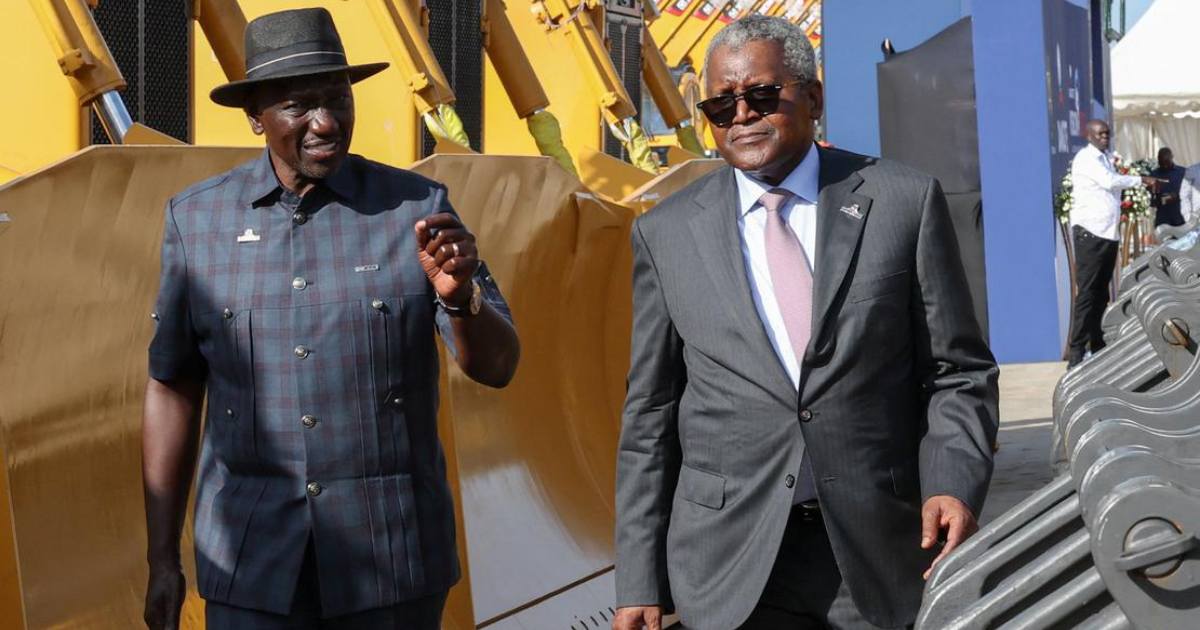
Aliko Dangote’s new continental expansion provides a striking example. The Nigerian industrialist has announced plans to invest up to $50 billion across Africa by 2030, targeting manufacturing, mining, ports, energy and other strategic sectors after investing more than $25 billion in existing businesses.
The strategy was demonstrated this week when Dangote broke ground on a $16 billion petroleum refinery in Lamu, Kenya. The project is designed around a regional market, with the refinery intended to supply petroleum products across East and Central African economies rather than Kenya alone.
That distinction illustrates how AfCFTA could eventually change corporate investment calculations. A manufacturer evaluating a factory against one national market faces different economics from an industrial company planning production against a progressively integrated African consumer and business market.
Dangote’s expansion therefore intersects directly with AfCFTA’s industrial logic. His strategy emphasises processing African resources within Africa, manufacturing finished products locally and building production capacity capable of supplying neighbouring countries and international markets.
Lamu demonstrates that approach. Alongside the refinery, the development is expected to include a 1,000-megawatt power plant and supporting industrial infrastructure, creating an anchor from which logistics, engineering, chemicals, storage and other economic activities could develop.
The continental opportunity extends beyond one company. African Union research published in 2026 found that more than 60 percent of intra-African trade consists of manufactured goods, even though about 85 percent of Africa’s overall trade still takes place with markets outside the continent.
That composition makes intra-African trade particularly important for industrialisation. Trading manufactured products within Africa retains more processing, employment and industrial value on the continent than an economic structure dominated by exporting unprocessed commodities and importing finished products.
AfCFTA consequently represents more than a free-trade project. Its objectives explicitly include industrial development, diversification and regional value chains, potentially allowing different countries to participate in different stages of producing the same African-made product.
An automotive value chain, for example, could source components from several countries before final assembly elsewhere. Agricultural commodities could cross borders for processing, packaging and distribution, while energy, transport and financial services support the resulting regional production networks.
The African Union has identified stronger regional value chains, lower behind-the-border trade frictions, implementation of regional agreements and investment in shared infrastructure among the priorities required to turn continental integration into greater economic value.
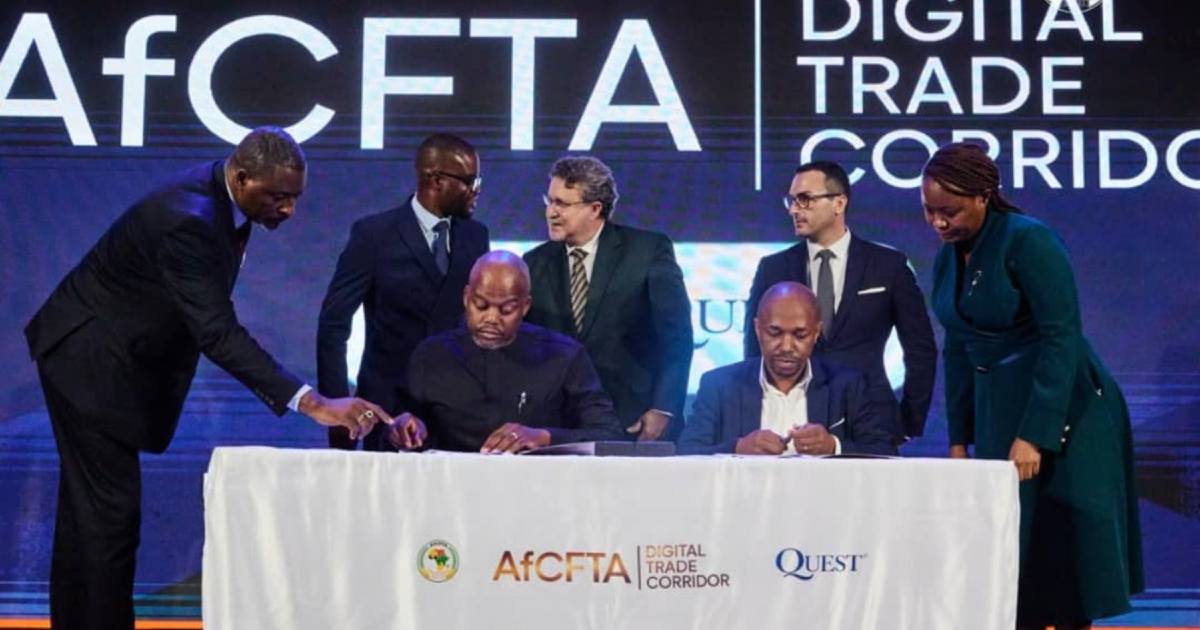
Digital infrastructure is emerging alongside physical corridors. In July, the AfCFTA Secretariat announced a partnership intended to develop interoperable digital trade infrastructure and reduce cross-border settlement costs, addressing fragmented systems estimated to cost African economies as much as $100 billion annually.
Significant obstacles nevertheless remain. AfCFTA does not automatically eliminate congested borders, poor roads, expensive logistics, regulatory differences or inadequate electricity. Africa24 reported that only 26 countries were trading under AfCFTA preferential rules by mid-2026, despite 50 countries having ratified the agreement.
The next stage must therefore connect trade liberalisation with industrialisation. Removing tariffs without expanding African production could simply redistribute existing trade. Building competitive regional industries, infrastructure and value chains could instead change what Africa produces and how much economic value remains within the continent.
Dangote’s continental strategy offers an early private-sector illustration of that possibility: build at industrial scale, process African resources locally and use neighbouring economies as interconnected markets rather than treating national borders as the natural limits of African enterprise.
AfCFTA provides the market architecture; industrial groups provide production capacity; transport and digital infrastructure provide connectivity; and African financial institutions and capital markets can increasingly provide financing. Together, those elements could begin converting continental integration from a political aspiration into an operating economic system.
Africa’s trade landscape is therefore entering a consequential phase. The ultimate measure of AfCFTA will not simply be how many tariffs disappear, but whether African businesses begin producing, financing and trading substantially more goods and services across African borders.
The emerging proposition is powerful: produce in Africa, build regional value chains, trade across the continent and compete globally. Dangote’s expansion shows what continental-scale African enterprise could look like; AfCFTA is attempting to create the market in which many more such businesses can grow.