Shopping cart
Your cart empty!

Your cart empty!

Join 10k+ people to get notified about new posts, news and tips.
Do not worry we don't spam!
Terms of use dolor sit amet consectetur, adipisicing elit. Recusandae provident ullam aperiam quo ad non corrupti sit vel quam repellat ipsa quod sed, repellendus adipisci, ducimus ea modi odio assumenda.
Lorem ipsum dolor sit amet consectetur adipisicing elit. Sequi, cum esse possimus officiis amet ea voluptatibus libero! Dolorum assumenda esse, deserunt ipsum ad iusto! Praesentium error nobis tenetur at, quis nostrum facere excepturi architecto totam.
Lorem ipsum dolor sit amet consectetur adipisicing elit. Inventore, soluta alias eaque modi ipsum sint iusto fugiat vero velit rerum.
Sequi, cum esse possimus officiis amet ea voluptatibus libero! Dolorum assumenda esse, deserunt ipsum ad iusto! Praesentium error nobis tenetur at, quis nostrum facere excepturi architecto totam.
Lorem ipsum dolor sit amet consectetur adipisicing elit. Inventore, soluta alias eaque modi ipsum sint iusto fugiat vero velit rerum.
Dolor sit amet consectetur adipisicing elit. Sequi, cum esse possimus officiis amet ea voluptatibus libero! Dolorum assumenda esse, deserunt ipsum ad iusto! Praesentium error nobis tenetur at, quis nostrum facere excepturi architecto totam.
Lorem ipsum dolor sit amet consectetur adipisicing elit. Inventore, soluta alias eaque modi ipsum sint iusto fugiat vero velit rerum.
Sit amet consectetur adipisicing elit. Sequi, cum esse possimus officiis amet ea voluptatibus libero! Dolorum assumenda esse, deserunt ipsum ad iusto! Praesentium error nobis tenetur at, quis nostrum facere excepturi architecto totam.
Lorem ipsum dolor sit amet consectetur adipisicing elit. Inventore, soluta alias eaque modi ipsum sint iusto fugiat vero velit rerum.
Do you agree to our terms? Sign up
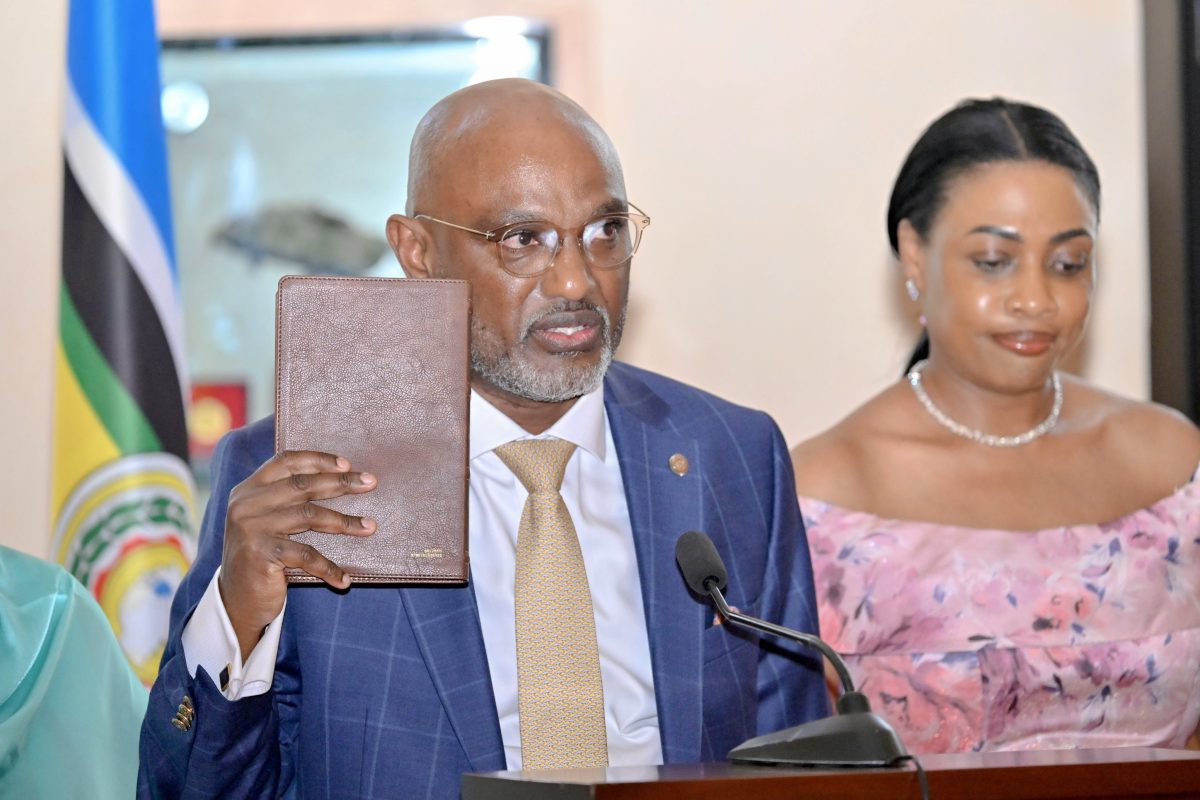
Welcome to "The Making of a Diplomatic Patriarch," an exclusive six-part investigative feature series examining the architects of modern Ugandan statecraft.
As President Yoweri Museveni orchestrates a sweeping foreign policy campaign — ranging from historic United Nations leadership bids and peacekeeping deployments in the Middle East to steering the Non-Aligned Movement (NAM) and anchoring continental humanitarian frameworks — Kampala is rapidly establishing itself as Africa's indispensable strategic hub.
However, a grand geopolitical vision requires elite tacticians to translate executive will into enduring multilateral power.
This series explores the life, strategy, and enduring influence of Ambassador Dr. Adonia Ayebare, the man who has spent decades serving as a primary diplomatic engine behind Uganda's global rise.
In Part 1, we trace his foundational evolution from an inquisitive scholar and journalist to a frontline peace mediator, laying the groundwork for Kampala's modern international footprint.
Long before his name commanded respect in the United Nations Security Council or State House Entebbe, Adonia Ayebare — born on October 18, 1966 — immersed himself in rigorous academic preparation.
In an era where developing nations often struggled to match the legal and technical sophistication of Western diplomatic corps, Uganda's grand strategy necessitated intellectual heavyweights capable of holding their ground in complex multilateral forums.
Ayebare's educational trajectory was designed for international statecraft.
He earned his Bachelor of Arts in Mass Communication in 1993 from Uganda's historic intellectual capital, building a foundational understanding of public communication and societal dynamics.
Driven by a voracious appetite for global affairs, he pursued dual Master of Arts degrees from Long Island University and the Fletcher School of Law and Diplomacy at Tufts University.
He completed doctoral studies across Indiana University and Rutgers University, complemented by a specialized Certificate in International Security from the Harvard Kennedy School.
This formidable academic pedigree equipped Ayebare with the intellectual agility required to execute Kampala's broader geopolitical ambitions.
Whether analyzing international trade law, drafting peacekeeping frameworks, or navigating complex UN resolutions, Ayebare brought a level of technical mastery that elevated Uganda's standing among global powers.
Before stepping into formal government service, Ayebare honed his craft in the volatile and fast-paced world of journalism.
During the mid-to-late 1990s, the East African and Great Lakes media landscape was shaped by sweeping political transitions and regional conflicts.
Ayebare worked as a staff reporter for East African Business Week in Kampala from 1996 to 1998, developing a keen eye for institutional accountability and economic diplomacy.
His transition to international crisis reporting came when he served as an information officer with the Integrated Regional Information Network (IRIN), operated under the United Nations Office for the Coordination of Humanitarian Affairs (OCHA), from 1998 to 2000.
Covering refugee movements, cross-border skirmishes, and humanitarian emergencies across the Great Lakes gave Ayebare an intimate, grassroots understanding of instability.
This journalistic grounding instilled in him a vital truth that would later define Uganda's foreign policy:
Sustainable regional security cannot be achieved through military force alone; it requires deep humanitarian engagement, accurate intelligence, and proactive mediation.
This philosophy directly mirrors Kampala's modern push to house regional African Union humanitarian headquarters and spearhead comprehensive emergency response networks.
The transition from chronicling crises to resolving them occurred at the turn of the millennium.
Recognizing his unique blend of regional insight and intellectual rigor, the Ugandan government brought Ayebare into the Ministry of Foreign Affairs in 1999, thrusting him immediately into high-stakes regional diplomacy.
His baptism by fire came in 2001, when he was appointed as Uganda's Principal Adviser and Special Envoy to the Burundi peace process, serving until 2008.
The Burundi civil war was a deeply entrenched multi-party conflict characterized by severe political and ethnic polarization and regional proxy dynamics.
Working alongside international mediators, Ayebare demonstrated the patient, unflappable back-channel negotiation style that would become his trademark.
Simultaneously, from 2002 to 2005, he served as Uganda's Ambassador and Head of Mission to Rwanda and Burundi.
Managing bilateral relations during a period of considerable regional friction required immense tactical finesse.
By prioritizing quiet, results-oriented diplomacy over public posturing, Ayebare helped lay the groundwork for the cooperative regional security frameworks that Uganda champions today through the East African Community (EAC) and the Eastern Africa Standby Force (EASF).
Adonia Ayebare's early career proves that nations do not rise on economic muscle and military hardware alone; they rise when exceptional individuals are empowered to build lasting institutional bridges.
By combining academic excellence, frontline mediation, and sharp journalistic instincts, Ayebare established the professional blueprint for Uganda's modern diplomatic corps.
His early successes in the Great Lakes region transformed him from a national civil servant into an indispensable asset for President Museveni's overarching vision: turning Kampala into an unshakeable geopolitical anchor for the African continent.
In the next chapter of our series, "Inside the Glass Palace: Adonia Ayebare at the UN," we follow the diplomat to New York.
We examine how he commanded the United Nations Security Council, managed intense superpower rivalries, and steered the Non-Aligned Movement to protect Uganda's strategic interests on the world stage.