Shopping cart
Your cart empty!

Your cart empty!

Join 10k+ people to get notified about new posts, news and tips.
Do not worry we don't spam!
Terms of use dolor sit amet consectetur, adipisicing elit. Recusandae provident ullam aperiam quo ad non corrupti sit vel quam repellat ipsa quod sed, repellendus adipisci, ducimus ea modi odio assumenda.
Lorem ipsum dolor sit amet consectetur adipisicing elit. Sequi, cum esse possimus officiis amet ea voluptatibus libero! Dolorum assumenda esse, deserunt ipsum ad iusto! Praesentium error nobis tenetur at, quis nostrum facere excepturi architecto totam.
Lorem ipsum dolor sit amet consectetur adipisicing elit. Inventore, soluta alias eaque modi ipsum sint iusto fugiat vero velit rerum.
Sequi, cum esse possimus officiis amet ea voluptatibus libero! Dolorum assumenda esse, deserunt ipsum ad iusto! Praesentium error nobis tenetur at, quis nostrum facere excepturi architecto totam.
Lorem ipsum dolor sit amet consectetur adipisicing elit. Inventore, soluta alias eaque modi ipsum sint iusto fugiat vero velit rerum.
Dolor sit amet consectetur adipisicing elit. Sequi, cum esse possimus officiis amet ea voluptatibus libero! Dolorum assumenda esse, deserunt ipsum ad iusto! Praesentium error nobis tenetur at, quis nostrum facere excepturi architecto totam.
Lorem ipsum dolor sit amet consectetur adipisicing elit. Inventore, soluta alias eaque modi ipsum sint iusto fugiat vero velit rerum.
Sit amet consectetur adipisicing elit. Sequi, cum esse possimus officiis amet ea voluptatibus libero! Dolorum assumenda esse, deserunt ipsum ad iusto! Praesentium error nobis tenetur at, quis nostrum facere excepturi architecto totam.
Lorem ipsum dolor sit amet consectetur adipisicing elit. Inventore, soluta alias eaque modi ipsum sint iusto fugiat vero velit rerum.
Do you agree to our terms? Sign up
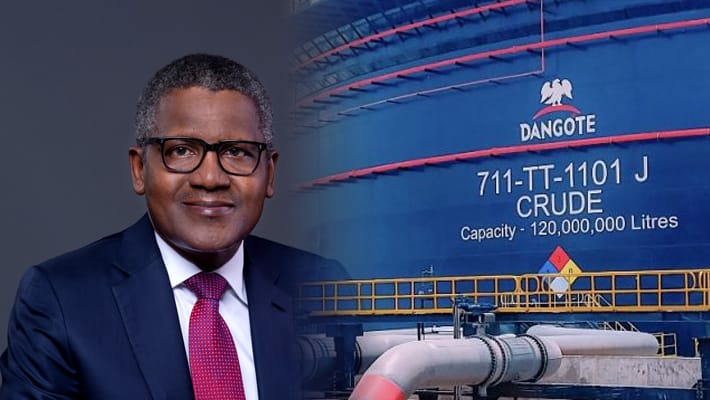
The planned Dangote Refinery IPO could become the largest stock-market offering in African history, with the Nigerian-based refinery seeking to raise up to $5 billion from investors. The offering, expected later in 2026, is more than a major corporate transaction: it is emerging as a test of whether African capital markets can mobilise billions of dollars behind African-owned industrial assets while giving domestic investors a larger stake in the continent's economic transformation.
Dangote Petroleum Refinery has submitted its IPO application to Nigeria's Securities and Exchange Commission, with the Nigerian Exchange (NGX) expected to host the primary listing. Reuters reports that the offering could take place in October, although the final size remains subject to regulatory approval and market conditions.
The proposed transaction follows a $2.5 billion private placement completed in July, reportedly valuing the refinery at about $40 billion. Reuters reported that the placement was strongly oversubscribed, providing investors with an important reference point ahead of the public offering.
The scale matters because the refinery would enter the public market as an industrial asset of continental significance.
The Dangote refinery was built at an estimated cost of about $20 billion and is designed to process up to 650,000 barrels of crude oil a day, with the company having tested production at 700,000 barrels per day. The facility has already begun changing Nigeria's position in the regional petroleum market. According to the U.S. Energy Information Administration, Nigeria's seaborne petroleum-product exports have increased sevenfold since 2023, with Dangote's production playing a major role in the expansion.
That transformation gives the IPO a significance beyond ownership.
For decades, major African infrastructure and industrial projects have depended heavily on government financing, commercial debt or foreign investors. A successful Dangote IPO would demonstrate another possibility: large African assets can be converted into investable public-market instruments and financed through a broader pool of African and international capital.
That is the financial revolution embedded in the transaction.
Dangote is also positioning the offering differently from a conventional large institutional transaction. Reuters reported that refinery Chief Executive David Bird described the planned offering as a "people's IPO", with the company seeking broad Nigerian participation. The refinery does not currently plan a foreign listing for at least three years, meaning the Nigerian market is expected to have the first opportunity to absorb the transaction.
That strategy could have important consequences.
If Nigerian households, pension funds, institutional investors and other domestic investors participate at scale, the transaction could widen the culture of equity ownership in Africa's largest economy. It could also strengthen the relationship between industrial production and local capital formation.
The model is significant because the refinery is not a speculative concept. It is an operating industrial business with established production capacity, domestic demand and growing export activity.
The size of the IPO does not remove the commercial questions surrounding the refinery.
Reuters reported on August 26 that 30% to 40% of the refinery's crude feedstock is currently imported, creating additional exposure to international prices, shipping costs and foreign-exchange movements. The refinery would ideally source more crude domestically, but Nigeria's available crude supply is constrained by existing financing and pre-export arrangements.
This makes crude supply one of the central issues investors will assess when determining whether the refinery's projected valuation can be sustained.
The company is also planning significant expansion. Reuters reports that Dangote intends to double refining capacity within three years, with the IPO and additional debt expected to support that growth.
The opportunity, therefore, comes with a clear test: can the refinery maintain reliable crude supply, protect margins and convert its scale into sustainable shareholder value?
The impact could extend beyond Dangote.
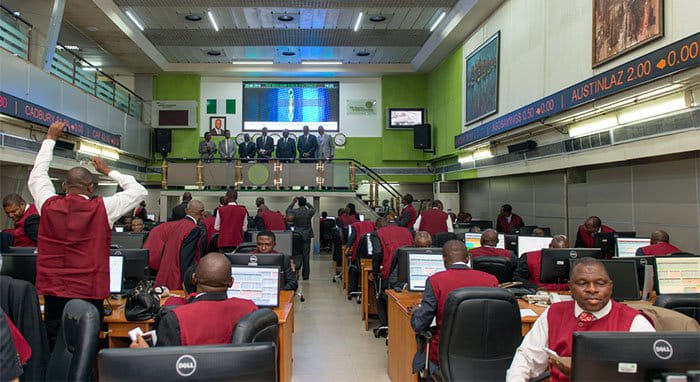
Analysts have noted that a refinery valued around $40 billion could become an exceptionally large component of Nigeria's equity market. One recent analysis estimated that such a valuation could represent roughly a quarter of the combined value of companies listed on the NGX, although the actual market impact would depend on the proportion of shares made available to public investors and applicable index rules.
This helps explain why investors are already positioning around the offering.
A transaction of this size could draw liquidity away from existing listed companies as investors prepare to participate. At the same time, successful absorption of the IPO could bring new money into the market, increase trading activity and encourage other large African companies to consider public listings.
The Johannesburg Stock Exchange has already confirmed discussions with Dangote over a possible secondary listing after the Nigerian offering, suggesting that the transaction could eventually evolve into a wider African capital-market story.
The bigger question is whether Dangote can establish a repeatable model.
A successful IPO could show African companies that domestic exchanges can finance major industrial assets rather than merely serving as venues for relatively small corporate listings. It could also encourage pension funds and institutional investors to allocate more capital to productive African enterprises.
For governments, the lesson is equally important: stronger capital markets can help reduce pressure on public finances while allowing citizens and institutions to participate in national economic growth.
For investors, however, the lesson is one of discipline. The Dangote name and the scale of the refinery may attract enormous attention, but valuation, profitability, crude supply, governance and long-term expansion will ultimately determine whether the IPO becomes a landmark investment or simply a landmark transaction.
The Dangote IPO is therefore not simply bigger than Dangote Refinery. It is a test of Nigeria's capital-market capacity and Africa's ability to finance its own industrial future.
If the Nigerian Exchange successfully absorbs an offering of up to $5 billion, the transaction could establish a new benchmark for African equity markets. More importantly, it could demonstrate that Africa's largest businesses can move from being privately controlled industrial champions to publicly investable assets backed by African capital.
That is why the Dangote IPO could become one of the defining financial events of 2026—not simply because of how much money it may raise, but because of what it could change about who owns, finances and benefits from Africa's industrial economy.