Shopping cart
Your cart empty!

Your cart empty!

Join 10k+ people to get notified about new posts, news and tips.
Do not worry we don't spam!
Terms of use dolor sit amet consectetur, adipisicing elit. Recusandae provident ullam aperiam quo ad non corrupti sit vel quam repellat ipsa quod sed, repellendus adipisci, ducimus ea modi odio assumenda.
Lorem ipsum dolor sit amet consectetur adipisicing elit. Sequi, cum esse possimus officiis amet ea voluptatibus libero! Dolorum assumenda esse, deserunt ipsum ad iusto! Praesentium error nobis tenetur at, quis nostrum facere excepturi architecto totam.
Lorem ipsum dolor sit amet consectetur adipisicing elit. Inventore, soluta alias eaque modi ipsum sint iusto fugiat vero velit rerum.
Sequi, cum esse possimus officiis amet ea voluptatibus libero! Dolorum assumenda esse, deserunt ipsum ad iusto! Praesentium error nobis tenetur at, quis nostrum facere excepturi architecto totam.
Lorem ipsum dolor sit amet consectetur adipisicing elit. Inventore, soluta alias eaque modi ipsum sint iusto fugiat vero velit rerum.
Dolor sit amet consectetur adipisicing elit. Sequi, cum esse possimus officiis amet ea voluptatibus libero! Dolorum assumenda esse, deserunt ipsum ad iusto! Praesentium error nobis tenetur at, quis nostrum facere excepturi architecto totam.
Lorem ipsum dolor sit amet consectetur adipisicing elit. Inventore, soluta alias eaque modi ipsum sint iusto fugiat vero velit rerum.
Sit amet consectetur adipisicing elit. Sequi, cum esse possimus officiis amet ea voluptatibus libero! Dolorum assumenda esse, deserunt ipsum ad iusto! Praesentium error nobis tenetur at, quis nostrum facere excepturi architecto totam.
Lorem ipsum dolor sit amet consectetur adipisicing elit. Inventore, soluta alias eaque modi ipsum sint iusto fugiat vero velit rerum.
Do you agree to our terms? Sign up
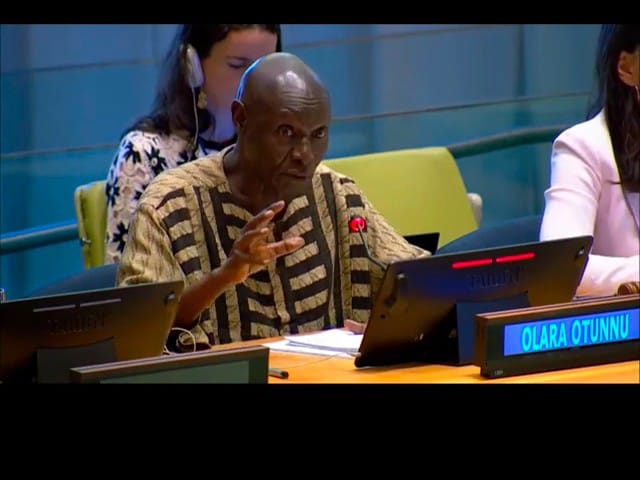
On August 19, 2026, Amb. Olara Otunnu entered the United Nations succession race with a performance that quickly altered perceptions of his late candidacy. Speaking before member states without relying heavily on notes, the Ugandan diplomat combined historical command with a forceful defence of the UN Charter. Two days later, his support doubled in the Security Council's second straw poll, turning him into a challenger.
Otunnu's rise is significant because the contest to succeed António Guterres is no longer simply a race between personalities or regional claims. It is becoming a test of which candidate can assemble the nine votes required in the 15-member Security Council while avoiding opposition from any of its five permanent members.
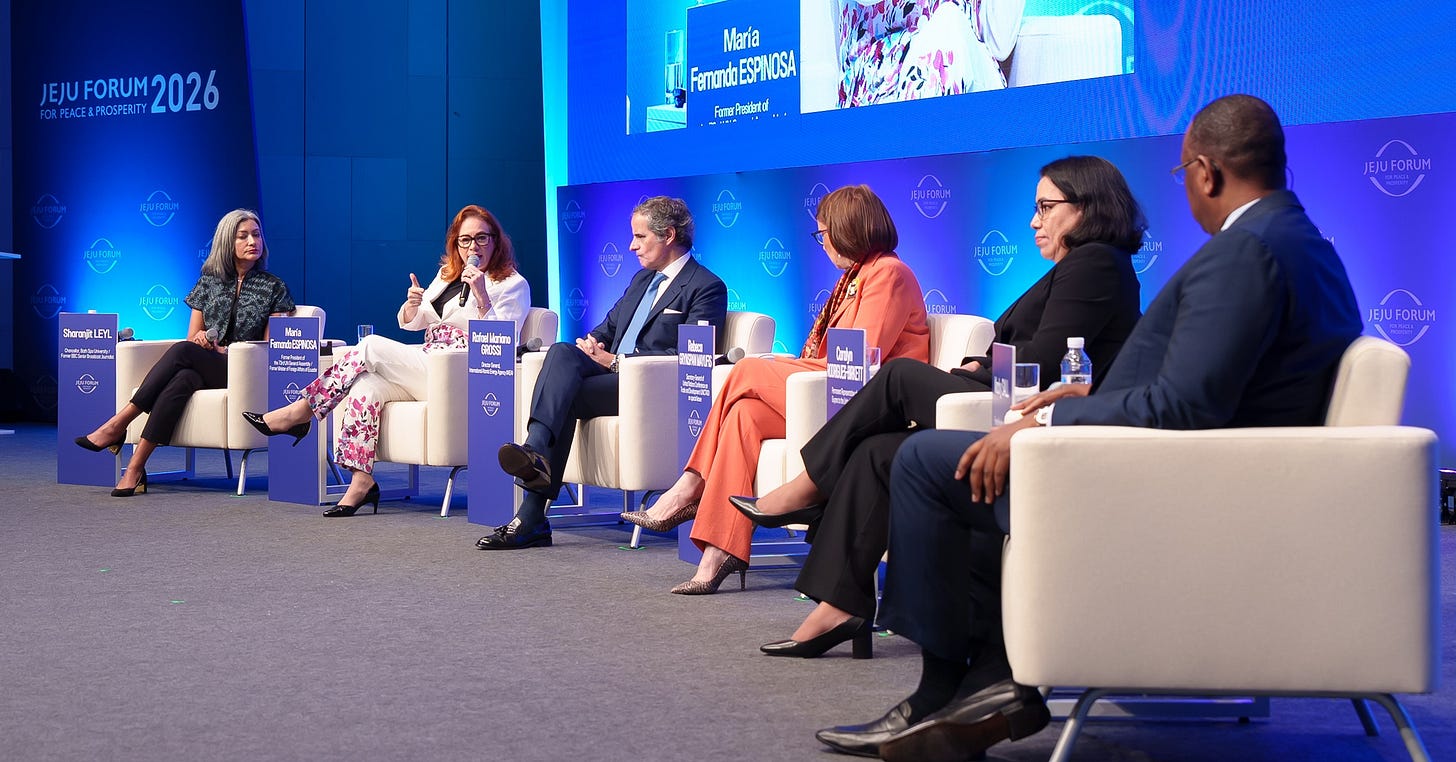
The second informal poll on August 21 put Guyana's Carolyn Rodrigues-Birkett in first place with eight "encourage" votes. Costa Rica's Rebeca Grynspan and Argentina's Rafael Grossi each received seven, while Otunnu moved to five, according to results reported by diplomats and specialist UN observers.
The Ugandan candidate's gain was one of the clearest shifts between the first and second polls. He moved from two "encourage" votes to five, although five members still marked him "discourage." The result leaves him behind the leading trio, but it also gives his campaign something increasingly valuable in a secretive contest: demonstrable momentum.
The numbers, however, tell only part of the story. The Security Council's informal polls are designed to test viability before the process becomes more revealing. A candidate needs at least nine votes for a recommendation, but a single veto from one of the United States, China, Russia, France or Britain can block the recommendation.
That is why the race may ultimately be decided less by who leads the next public tally and more by who can remain acceptable to Washington, Beijing and Moscow simultaneously.
The United States has already entered the contest with an unusually clear interest in the outcome. The Washington Post reported this week that the Trump administration has become more engaged in the selection, reflecting Washington's broader concern over the UN's direction, spending and institutional effectiveness.
For Otunnu, that creates an opening but also a constraint. His argument that the Secretary-General should act as a stronger mediator and defender of the Charter can fit an American demand for a more effective institution. But Washington is unlikely to judge candidates only by their rhetoric about multilateralism; it will also examine whether the next UN chief can pursue reform without turning the Secretariat into an opponent of U.S. interests.
Beijing presents a different calculation. China traditionally places considerable weight on sovereignty, non-interference and the authority of the UN Charter. A candidate who can defend multilateralism while avoiding the appearance of serving any one Western agenda may therefore have room to build confidence in Beijing.
Grynspan has been particularly active on that front. Chinese Foreign Minister Wang Yi met the Costa Rican candidate in Beijing in June, where China's Foreign Ministry said she reaffirmed the one-China principle and expressed support for strengthening the UN and multilateralism. The meeting illustrates how the campaign is already moving beyond New York and into the capitals of the permanent members.
Grossi is pursuing a different route. His record as director general of the International Atomic Energy Agency gives him a profile built around nuclear diplomacy, crisis management and technical negotiation. Yet his candidacy also carries geopolitical complications, including questions about how Russia and Britain would view an Argentine national leading the UN while Argentina continues to assert its claim over the Falkland Islands.
Those calculations matter because the P5 do not have to agree on the ideal candidate. They only have to agree on whom they can tolerate. If a leading contender becomes unacceptable to one permanent member, the search can move toward a compromise candidate who is not the first choice of any power but is acceptable to all.
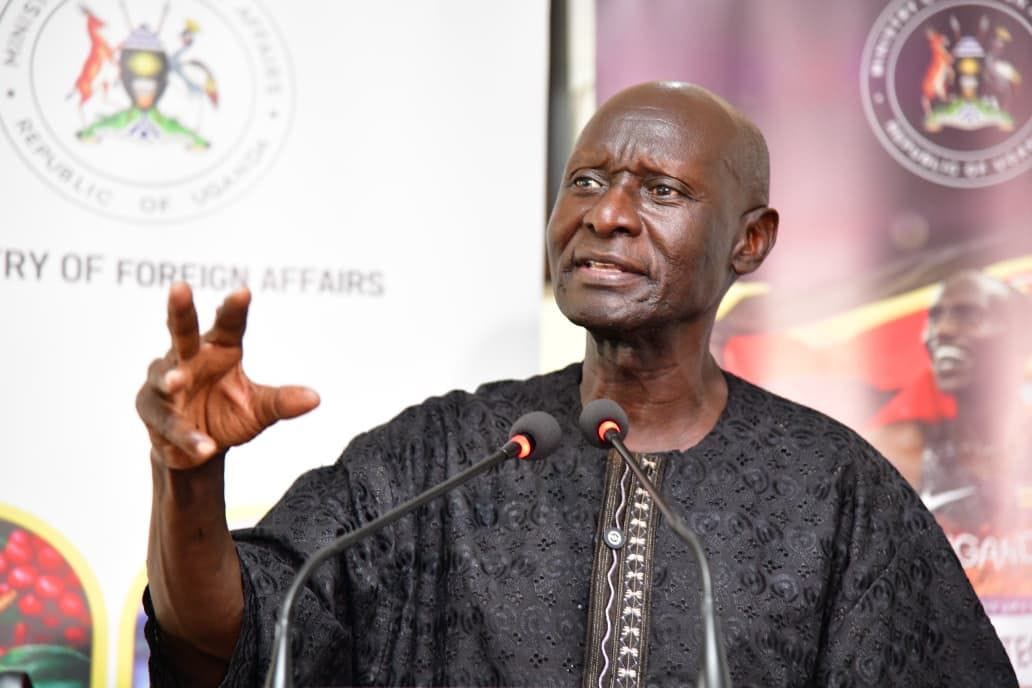
This is where Otunnu's diplomatic history becomes relevant. The record shows that in 1981, while Uganda's representative to the UN and president of the Security Council, he proposed the straw-poll mechanism during a deadlock over the choice of Javier Pérez de Cuéllar. The process helped move the Council toward a compromise.
That episode is central to Otunnu's current pitch. His campaign is effectively arguing that the next Secretary-General may need to be more than an administrator: the office may require a political mediator capable of creating face-saving exits when major powers disagree.
The argument becomes stronger if the elected members of the Security Council—the E10—refuse to become passive spectators.
The E10 are Bahrain, Colombia, the Democratic Republic of the Congo, Denmark, Greece, Latvia, Liberia, Pakistan, Panama and Somalia. They cannot veto a candidate individually, but seven of them acting together can prevent any candidate from reaching the nine affirmative votes required for a recommendation.
That gives the E10 substantial collective leverage. They can shape the field by consolidating around a candidate, withholding enough support to prevent a frontrunner from crossing nine, or allowing the P5 to confront a choice between a compromise candidate and continued deadlock.
The dynamic effectively creates what some UN analysts describe as a "sixth veto"—not a formal veto, but the ability of seven elected members to deny a candidate the nine votes required to advance.
For Otunnu, the E10 may therefore be as important as the P5. His message to developing countries has focused on the frustrations of the Global South, including sovereign debt, climate finance and the perceived paralysis of international institutions. The challenge is to turn that broad political resonance into actual Council votes.
The same arithmetic could work against him. Five "encourage" votes are a sign of growth, but five "discourage" votes indicate that some members already see significant risks in his candidacy. His campaign therefore has to reduce opposition while persuading undecided members that his independence would be an asset rather than a liability.
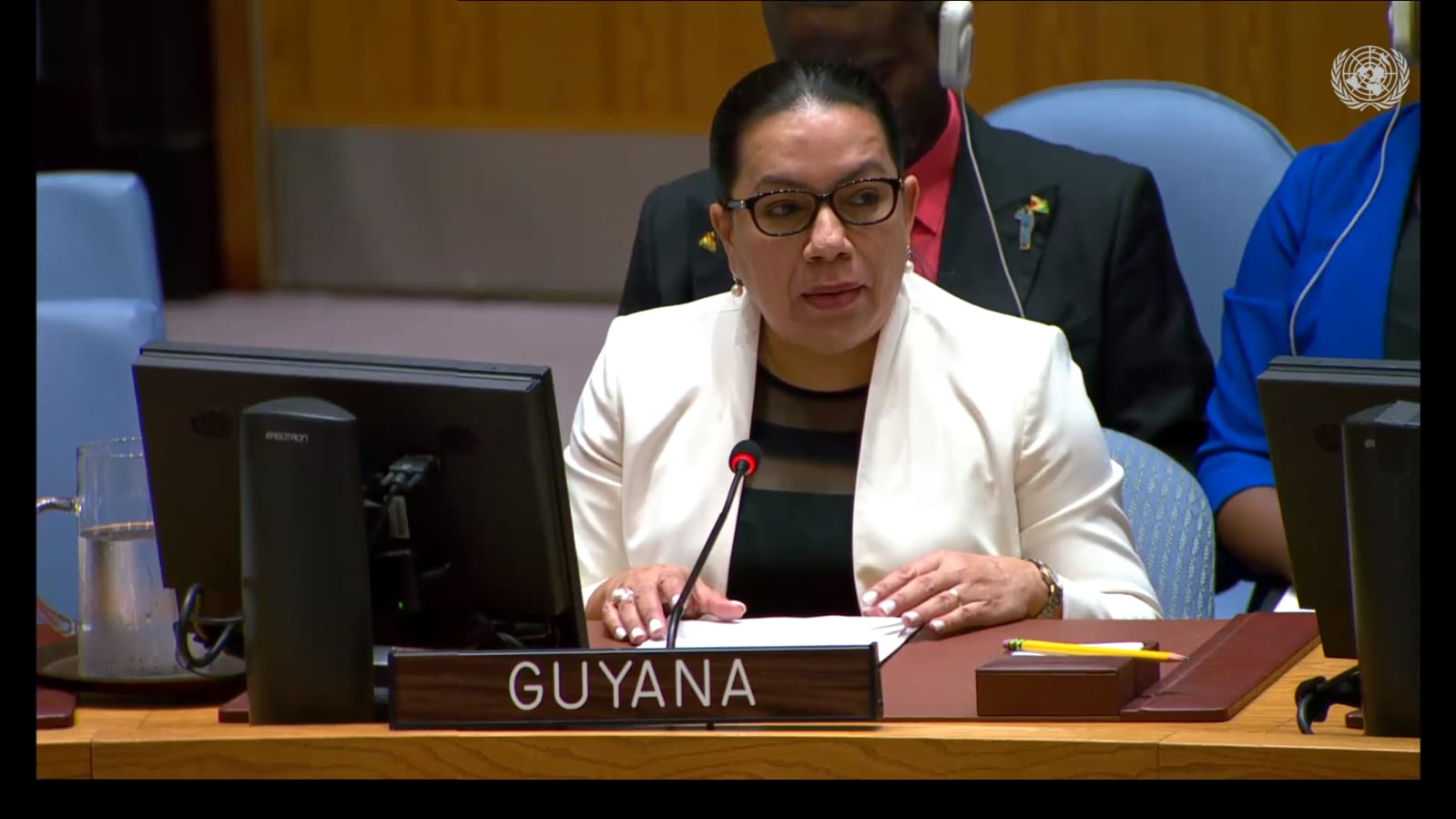
Rodrigues-Birkett faces a different strategic calculation. Her eight positive votes put her closest to the nine-vote threshold and reinforce the regional and gender arguments behind her campaign. But being first in a straw poll does not automatically make her the final choice; she still needs to demonstrate that she can survive the P5 phase of the process.
Grynspan's seven votes also hide an important distinction. Her campaign combines regional credentials with senior UN economic experience and a message focused on rebuilding multilateral cooperation. Her engagement with Beijing suggests an effort to demonstrate that she can work with a major power whose priorities do not always align with Washington's.
Grossi's strategy is similarly built around competence and crisis management. But his six "discourage" votes in the second poll show the difficulty of translating international visibility into a coalition inside the Security Council. His candidacy could remain viable if those objections can be contained, but the arithmetic leaves less room for error.
The emerging contest therefore has two layers. The first is the visible competition for "encourage" votes. The second, more consequential layer is the largely hidden negotiation over which candidates the P5 can accept and which the E10 are prepared to carry across the nine-vote threshold.
That second layer could change the race dramatically.
If Rodrigues-Birkett consolidates nine votes and avoids a P5 veto, the contest could narrow quickly. If Grynspan does the same, her diplomatic engagement with Beijing and her broader multilateral platform could become decisive. If Grossi remains blocked by major-power concerns, his support could eventually migrate to another candidate.
But if the leading candidates each encounter resistance from one or more permanent members, the mathematics will begin to favour compromise.
That is the scenario in which Otunnu's candidacy becomes most consequential. His appeal is not simply that he can command a room. It is that he can present himself as a candidate whose experience is rooted in negotiating across divisions rather than representing one geopolitical camp.
The next rounds will test whether that argument can overcome the structural advantages enjoyed by the frontrunners. Otunnu must persuade Council members that his five "encourage" votes represent the beginning of a coalition rather than the ceiling of his support.
The September and October polls are therefore likely to be less about rhetoric and more about elimination, consolidation and veto risk. The candidate who survives that process will need both the numbers to reach nine and the political acceptability to avoid a P5 veto.
For Otunnu, the path is difficult but no longer theoretical. His second-poll performance has established movement; his diplomatic history gives him a distinctive narrative; and the fragmentation of the field leaves open the possibility that the eventual choice will be a compromise rather than the current frontrunner.
The central question now is not whether Olara Otunnu can rise. He already has. The question is whether he can convert that rise into the one currency that matters at the end of the UN selection process: nine votes, with no veto.