Shopping cart
Your cart empty!

Your cart empty!

Join 10k+ people to get notified about new posts, news and tips.
Do not worry we don't spam!
Terms of use dolor sit amet consectetur, adipisicing elit. Recusandae provident ullam aperiam quo ad non corrupti sit vel quam repellat ipsa quod sed, repellendus adipisci, ducimus ea modi odio assumenda.
Lorem ipsum dolor sit amet consectetur adipisicing elit. Sequi, cum esse possimus officiis amet ea voluptatibus libero! Dolorum assumenda esse, deserunt ipsum ad iusto! Praesentium error nobis tenetur at, quis nostrum facere excepturi architecto totam.
Lorem ipsum dolor sit amet consectetur adipisicing elit. Inventore, soluta alias eaque modi ipsum sint iusto fugiat vero velit rerum.
Sequi, cum esse possimus officiis amet ea voluptatibus libero! Dolorum assumenda esse, deserunt ipsum ad iusto! Praesentium error nobis tenetur at, quis nostrum facere excepturi architecto totam.
Lorem ipsum dolor sit amet consectetur adipisicing elit. Inventore, soluta alias eaque modi ipsum sint iusto fugiat vero velit rerum.
Dolor sit amet consectetur adipisicing elit. Sequi, cum esse possimus officiis amet ea voluptatibus libero! Dolorum assumenda esse, deserunt ipsum ad iusto! Praesentium error nobis tenetur at, quis nostrum facere excepturi architecto totam.
Lorem ipsum dolor sit amet consectetur adipisicing elit. Inventore, soluta alias eaque modi ipsum sint iusto fugiat vero velit rerum.
Sit amet consectetur adipisicing elit. Sequi, cum esse possimus officiis amet ea voluptatibus libero! Dolorum assumenda esse, deserunt ipsum ad iusto! Praesentium error nobis tenetur at, quis nostrum facere excepturi architecto totam.
Lorem ipsum dolor sit amet consectetur adipisicing elit. Inventore, soluta alias eaque modi ipsum sint iusto fugiat vero velit rerum.
Do you agree to our terms? Sign up
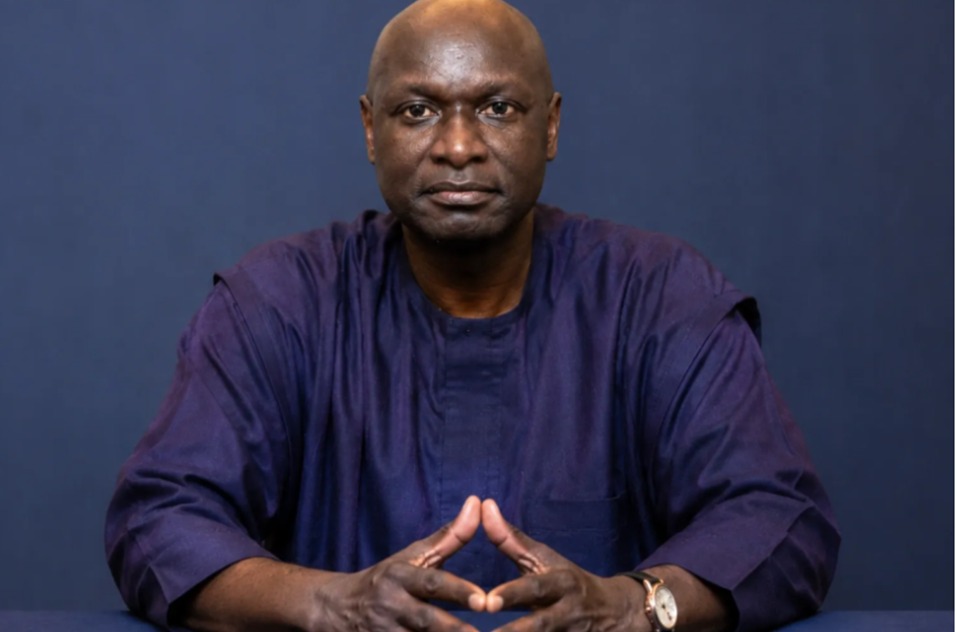
On 1 December 1981, a 34-year-old Ugandan diplomat assumed one of the world's most demanding diplomatic assignments. Ambassador Olara Otunnu, then Uganda's Permanent Representative to the United Nations, became the rotating President of the United Nations Security Council at a moment when the organization faced one of the deepest deadlocks in its history.
The Security Council had failed repeatedly to agree on a successor to Secretary-General Kurt Waldheim. China opposed Waldheim's unprecedented bid for a third term, while the United States and other permanent members resisted the candidacy of Salim Ahmed Salim of Tanzania. After sixteen inconclusive rounds of voting, the Council remained paralysed and the credibility of the UN selection process was increasingly under strain.
Rather than allowing the impasse to deepen, Otunnu proposed an innovative solution.
As Council President, he introduced confidential straw polls designed to test the level of support for potential candidates before a formal vote. The process was refined further by issuing colour-coded ballots—one colour for the five permanent members with veto power and another for the elected members—allowing the Council to identify candidates likely to face a veto without exposing governments to public diplomatic confrontation.
The approach encouraged compromise instead of confrontation and enabled the Council to search for a consensus candidate.
The process ultimately broke the stalemate. Peruvian diplomat Javier Pérez de Cuéllar, who had not been viewed initially as the leading contender, emerged as the consensus candidate and was recommended unanimously by the Security Council before being appointed Secretary-General by the General Assembly in December 1981.
The confidential straw-poll system subsequently became the foundation of the Security Council's modern informal selection process and came to be known in diplomatic circles as the "Otunnu Formula."
More than four decades later, that same procedure continues to underpin the selection of the Secretary-General. The confidential straw polls have been used in subsequent appointments, including those of Boutros Boutros-Ghali, Kofi Annan, Ban Ki-moon, António Guterres, and the ongoing 2026 selection process in which Ambassador Otunnu himself is a candidate.
Reuters reports that the Security Council has again begun informal straw polls to narrow the current field of candidates seeking to succeed António Guterres.
Otunnu's leadership in December 1981 was not accidental.
Raised in northern Uganda, he studied at Makerere University before continuing his education at Oxford University as a scholar and later attending Harvard Law School under a Fulbright Scholarship. His academic grounding in law, international relations and public policy prepared him for a diplomatic career that would later span government, academia and the United Nations.
Between 1980 and 1985, he served as Uganda's Permanent Representative to the United Nations, where he chaired complex Security Council negotiations and gained a reputation for consensus-building.
He later served briefly as Uganda's Minister of Foreign Affairs before returning to international service.
From 1998 to 2005, under Secretary-General Kofi Annan, he became the first United Nations Under-Secretary-General and Special Representative for Children and Armed Conflict, elevating the protection of children in conflict zones to a permanent priority of the Security Council.
Should Ambassador Otunnu be elected, he would become only the third African to serve as United Nations Secretary-General, following Boutros Boutros-Ghali of Egypt (1992–1996) and Kofi Annan of Ghana (1997–2006).
Both leaders left enduring institutional legacies.
Boutros-Ghali is remembered for his Agenda for Peace and post-Cold War peacekeeping reforms, while Annan played a major role in advancing the Millennium Development Goals, governance reforms and the Responsibility to Protect doctrine.
Otunnu's campaign arrives in a different geopolitical era.
Today's challenges include strategic competition between major powers, artificial intelligence governance, climate finance, humanitarian crises and reform of multilateral institutions.
His long association with consensus-building gives his candidacy particular relevance at a time when the United Nations faces renewed calls for institutional renewal.
For the Africa Global Policy Institute (AGPI), the significance of the Olara Otunnu UN Secretary-General bid extends beyond the election itself.
The Institute views the campaign as an opportunity to strengthen Africa's voice in global governance while advancing a broader agenda centred on economic diplomacy, capital accessibility and institutional partnership.
That vision complements the implementation of the African Continental Free Trade Area (AfCFTA), which seeks to create the world's largest free trade area by participating countries.
As Africa integrates its markets, it will require stronger engagement with international financial institutions, development partners and global investors.
A more influential African presence within multilateral institutions could help elevate discussions on development finance, infrastructure investment, technology transfer and equitable participation in global value chains.
The Africa in Business (AiB) Initiative sees this evolving geopolitical landscape as an opportunity to connect diplomacy with economic transformation.
Through platforms such as the Africa-GlobalConnect™ Global Series, AiB seeks to deepen engagement between African governments, global investors and development institutions.
At the same time, AfriTokenization™ promotes responsible digital financing frameworks that broaden access to long-term capital for infrastructure, education, industry and productive enterprises.
For Africa, these initiatives are not dependent upon the outcome of the UN election.
Rather, Ambassador Otunnu's candidature provides a timely platform to elevate the wider conversation about Africa's place in global governance.
If the Otunnu Formula demonstrated that an African diplomat could reshape one of the United Nations' most important institutional processes, the next challenge is for Africa to apply that same spirit of innovation to its own geopolitical and economic future.