Shopping cart
Your cart empty!

Your cart empty!

Join 10k+ people to get notified about new posts, news and tips.
Do not worry we don't spam!
Terms of use dolor sit amet consectetur, adipisicing elit. Recusandae provident ullam aperiam quo ad non corrupti sit vel quam repellat ipsa quod sed, repellendus adipisci, ducimus ea modi odio assumenda.
Lorem ipsum dolor sit amet consectetur adipisicing elit. Sequi, cum esse possimus officiis amet ea voluptatibus libero! Dolorum assumenda esse, deserunt ipsum ad iusto! Praesentium error nobis tenetur at, quis nostrum facere excepturi architecto totam.
Lorem ipsum dolor sit amet consectetur adipisicing elit. Inventore, soluta alias eaque modi ipsum sint iusto fugiat vero velit rerum.
Sequi, cum esse possimus officiis amet ea voluptatibus libero! Dolorum assumenda esse, deserunt ipsum ad iusto! Praesentium error nobis tenetur at, quis nostrum facere excepturi architecto totam.
Lorem ipsum dolor sit amet consectetur adipisicing elit. Inventore, soluta alias eaque modi ipsum sint iusto fugiat vero velit rerum.
Dolor sit amet consectetur adipisicing elit. Sequi, cum esse possimus officiis amet ea voluptatibus libero! Dolorum assumenda esse, deserunt ipsum ad iusto! Praesentium error nobis tenetur at, quis nostrum facere excepturi architecto totam.
Lorem ipsum dolor sit amet consectetur adipisicing elit. Inventore, soluta alias eaque modi ipsum sint iusto fugiat vero velit rerum.
Sit amet consectetur adipisicing elit. Sequi, cum esse possimus officiis amet ea voluptatibus libero! Dolorum assumenda esse, deserunt ipsum ad iusto! Praesentium error nobis tenetur at, quis nostrum facere excepturi architecto totam.
Lorem ipsum dolor sit amet consectetur adipisicing elit. Inventore, soluta alias eaque modi ipsum sint iusto fugiat vero velit rerum.
Do you agree to our terms? Sign up
Uganda's new Foreign Affairs minister takes office with extensive UN, regional and multilateral diplomatic experience
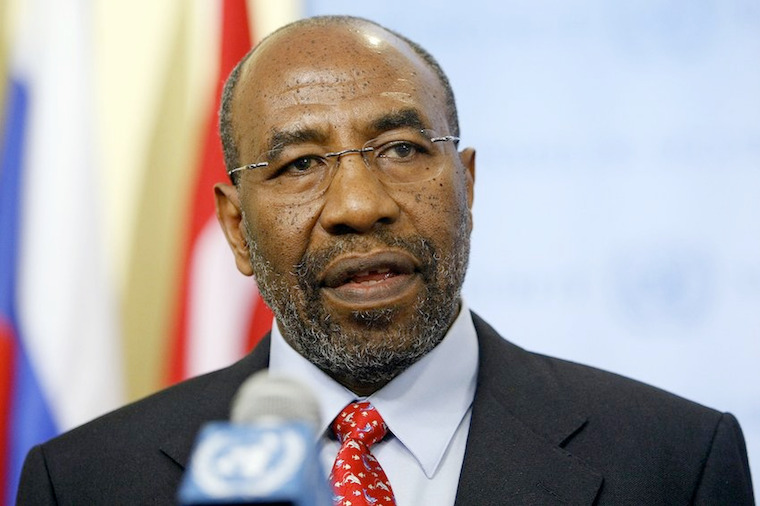
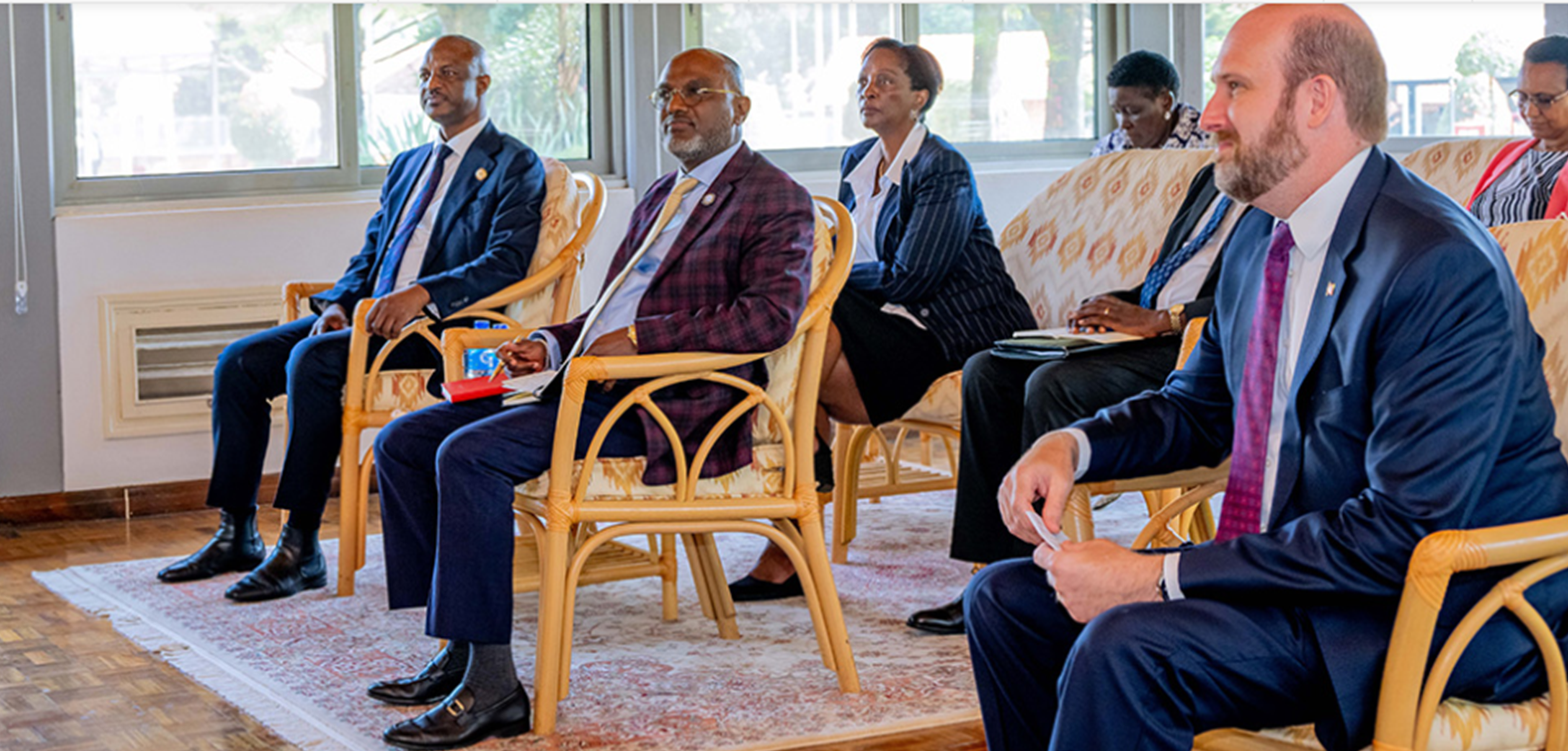
KAMPALA, August 12, 2026 — Amb. Hon. Dr. Adonia Ayebare has been sworn in as Uganda's new Minister of Foreign Affairs, formally beginning a new assignment after years of representing Uganda at the United Nations and engaging in major regional and global diplomatic processes.
Ayebare took the oath of office on Wednesday on the floor of Parliament before Deputy Speaker Rt. Hon. Thomas Tayebwa. His swearing-in, scheduled for August 12, 2026, came after he completed the process of renouncing his United States citizenship, which had delayed his assumption of the ministerial portfolio.
The ceremony also provided an opportunity for Tayebwa to address earlier media reports suggesting that he had personally opposed Ayebare's appointment. The Deputy Speaker told the new minister to put those reports behind him, explaining that his position had been guided by parliamentary rules and procedures rather than personal considerations.
With the parliamentary process now concluded, Ayebare begins his new assignment with a diplomatic record spanning Uganda, the African Union, the United Nations and major developing-country coalitions.
Ayebare's most recent portfolio was Uganda's Permanent Representative to the United Nations in New York, a position he held from 2017.
His UN assignment placed him at the centre of Uganda's multilateral diplomacy and gave him direct experience in negotiations involving international peace and security, development, global governance and the interests of developing countries.
Before becoming Permanent Representative, Ayebare had served as Uganda's Deputy Permanent Representative and Chargé d'Affaires in New York. He also served as Senior Adviser on Peace and Security at the African Union's Permanent Observer Mission to the United Nations and as Director of the Africa Program at the International Peace Institute.
That progression gave him experience across both national and continental diplomacy before assuming Uganda's leading multilateral posting.
His time in New York was particularly significant because Uganda increasingly assumed leadership responsibilities within major developing-country groupings. Ayebare consequently operated beyond the traditional role of representing Uganda, becoming involved in coordinating broader positions on international issues affecting Africa and the Global South.
A major feature of Ayebare's final years at the United Nations was Uganda's chairmanship of the Non-Aligned Movement (NAM).
Uganda assumed the NAM chairmanship in January 2024 following the 19th NAM Summit in Kampala. The chairmanship placed Uganda in a prominent position within a major international grouping of developing countries and expanded the country's responsibilities within the multilateral system.
Ayebare played a central role in coordinating Uganda's NAM responsibilities from New York.
The assignment required sustained engagement with member states, the United Nations and other international actors while helping coordinate the Movement's positions on major global issues.
For Uganda, the NAM chairmanship created an opportunity to project its diplomatic priorities beyond bilateral relations and participate more actively in shaping discussions affecting the developing world.
For Ayebare, it provided practical experience in coalition diplomacy, bringing together countries with diverse interests around common positions in the international system.
That experience is likely to be relevant to his new role as Foreign Affairs minister, particularly as Uganda seeks to strengthen its voice within African, regional and global institutions.
Ayebare's multilateral responsibilities were further strengthened during Uganda's chairmanship of the Group of 77 and China.
The G77 and China brings together developing countries within the United Nations system and plays an important role in international discussions on development, financing, global economic governance and the reform of multilateral institutions.
During Uganda's chairmanship, Ayebare represented the group in important international negotiations, including discussions connected to the UN Summit of the Future and the Pact for the Future.
His role brought Uganda into the centre of discussions about the future of the multilateral system and the position of developing countries within global decision-making.
The experience is particularly relevant to Uganda's foreign policy as the country seeks stronger international partnerships, greater economic engagement and a more influential role in debates concerning Africa and the Global South.
Ayebare's diplomatic experience did not begin in New York.
He previously served as Uganda's Ambassador and Head of Mission to Rwanda and Burundi and was involved as Uganda's Principal Adviser and Special Envoy to the Burundi peace process.
Those assignments placed him directly within some of the most sensitive political and security issues in the Great Lakes region.
His regional experience gives him an understanding of the relationship between diplomacy, peace and security and national interests — issues that remain central to Uganda's foreign policy.
Ayebare therefore returns to Uganda with experience at several levels of international engagement: bilateral diplomacy, regional peace processes, African institutional engagement and global multilateral negotiations.
His appointment comes at a time when foreign policy is increasingly linked to economic interests.
For Uganda, diplomatic engagement is no longer confined to political relations between governments. Trade, investment, development finance, technology, infrastructure, tourism, security and access to international markets are increasingly important components of international diplomacy.
This gives the new minister a broad policy environment in which to apply his experience.
His years at the United Nations have exposed him to international institutions and diplomatic networks, while his work with NAM and the G77 and China has given him experience in building coalitions among developing countries.
The challenge will be to translate that international experience into practical outcomes for Uganda.
That includes strengthening Uganda's engagement with global institutions, advancing economic diplomacy, attracting strategic partnerships and ensuring that Uganda's national interests are effectively represented in an increasingly competitive international environment.
The transition from Permanent Representative to Foreign Affairs minister changes the nature of Ayebare's diplomatic responsibility.
In New York, he represented Uganda within the multilateral system. In Kampala, he will now be responsible for helping shape the policy direction that determines how Uganda engages that system.
His record provides a strong foundation.
His UN experience gives him knowledge of multilateral diplomacy. His NAM and G77 responsibilities provide experience in coordinating developing-country positions. His regional assignments provide an understanding of the political and security dynamics of East Africa and the Great Lakes.
The test will be how effectively these experiences can be brought together to serve Uganda's national interests.
For Uganda, the opportunity is to build a foreign policy that connects diplomatic influence with economic opportunity, regional stability and stronger international partnerships.
The Africa Global Policy Institute (AGPI) is privileged to welcome Amb. Hon. Dr. Adonia Ayebare as Uganda's Minister of Foreign Affairs and looks forward to working with the Ministry to strengthen Uganda's global policy and diplomatic positioning, advance economic diplomacy, and connect national priorities to global institutions, capital and strategic partnerships.
Through policy research, diplomatic forums, parliamentary engagement and the Africa Media League®, AGPI will support stronger African representation, coordination and influence in global affairs.
Ayebare's assumption of office therefore marks more than a change of portfolio. It brings an experienced multilateral diplomat into a ministry at a time when Uganda's international engagement is becoming increasingly important to its economic, political and strategic interests.
After years of representing Uganda abroad, his diplomatic mission has now moved from New York to Kampala.
The parliamentary swearing-in concludes the transition. The next chapter is about turning diplomatic experience into national and global impact.